• Skip to primary navigation
  • Skip to main content
  • Skip to primary sidebar
  • Skip to footer

Sealing & Contamination Control Tips

Fluid Power Sealing and Contamination Control Information and Resources

  • News
  • Contamination Control
  • Filtration
  • Seals
  • Fluids
  • Design Guides
  • Advertise
  • Subscribe
You are here: Home / Featured / What causes O-ring failures?

What causes O-ring failures?

January 15, 2021 By Mary Gannon Leave a Comment

Share

By Josh Cosford, Contributing Editor

An O-ring is a polymer seal most often used in fluid power as either a dynamic or static seal. For light-duty pneumatic applications, an O-ring is a suitable seal technology used in pistons, piston rods, valve spools and other locations in air systems. O-rings best suit the sealing of static surfaces in hydraulic applications, such as cylinder barrel end seals, pump covers, and manifold interfaces, to name a few.

Static O-ring seals have but one job; prevent air or hydraulic pressure media from escaping cylinders, valves, pumps and other components. You must correctly design its cavity and choose the correct seal diameter and cross-section to suit that pocket. An O-ring must be squeezed upon installation, but not so much as to damage it. Additionally, the seal’s rubber compound must be selected with fluid and temperature in mind since even correctly sized seals will fail when poorly matched to its ambient conditions.

Understanding the top five reasons O-rings fail will help you ensure long-lasting designs.
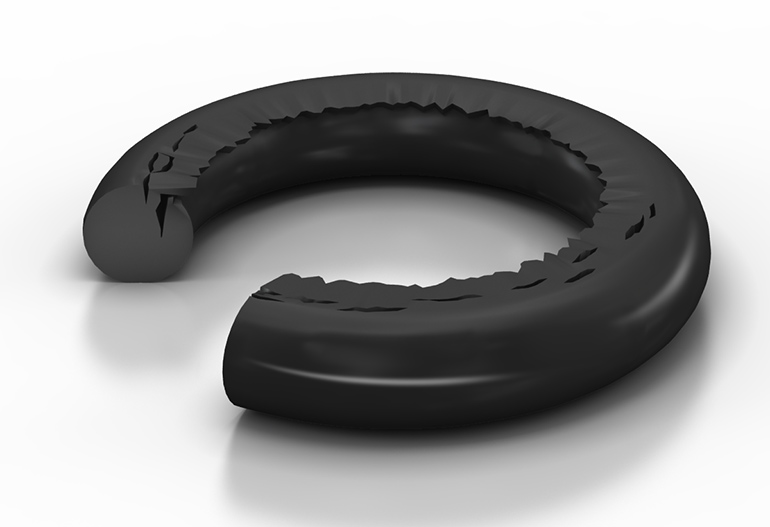
An example of extrusion nibbling. Image courtesy of Trelleborg Sealing Solutions
  1. Improperly designed seal pocket. A seal must reside slightly compressed within a cavity to prevent extrusion through the clearance between each surface. The space between the two sealing surfaces is called the extrusion gap, which cannot be too large. If the “E-gap” is too large, the pressure internal to the component may squeeze the rubber material out through that gap. This “nibbling” of the seal takes the form of a delicate ribbon of rubber trailing off the O-ring circumference.
  2. Seal too small. A seal too small for its designed pocket will not crush effectively and simply allow fluid to pass. This type of failure tends to occur quickly as the seal cannot form effectively to the pocket to prevent fluid bypass. Even if the size is marginally smaller than required, the seal will fail sooner than the correct one.
  3. Seal too large. If a seal is too large for its cavity, the component may never seal properly to begin with. For example, installing a piston rod into a cylinder head may be impossible if the O-ring is too large. A marginally larger seal may still allow installation to occur but will fail as the seal is compressed tighter than designed. An O-ring must be compressed enough to fill its cavity, but too much compression deforms the seal into a rectangular shape as it loses its elasticity.
  4. Incorrect temperature compatibility. The polymer of the O-ring must be selected to work within the specific temperature range for the application. A Buna Nitrile seal used in a cold environment results in the hardening of the O-ring, and it loses the elasticity required to conform to the shape of its cavity.
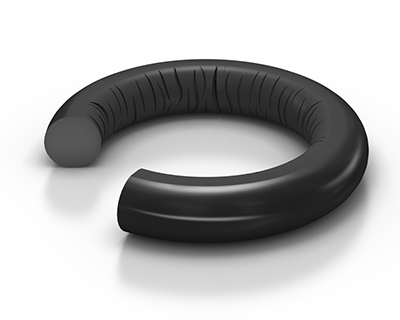
    An example of thermal degradation O-ring failure, damage caused by excessive heat. Image courtesy of Trelleborg Sealing Solutions
    An example of thermal degradation O-ring failure, damage caused by excessive heat. Image courtesy of Trelleborg Sealing Solutions

    Conversely, when you expose a seal to hot ambient conditions, it may become too soft. A hot O-ring may turn gooey and will easily extrude through small E-gaps, especially in applications where the E-gap can change, such as with O-rings used as end-seals in hydraulic cylinder barrels.

  1. Incorrect fluid compatibility. Not all seals work with all fluid media, and your seal polymer must be compatible with the fluid type. Many hydraulic applications using urethane seals and standard hydraulic oil will see no issues regarding compatibility. But if the fluid turns out to be water-glycol, for example, the urethane seals will crack or break apart.


You may also like:


  • Alternatives to O-rings for static sealing

  • Basics of static sealing
  • Peninsular Cylinder hydraulic cylinder seals renderings
    5 common failures of hydraulic cylinder seals
  • Trelleborg-CAD-Service hydrolysis
    How does hydrolysis affects seals?
  • COG Vi 900 FKM elastomer seals for oil and gas
    How should you store your elastomer seals for hydraulic and…

Filed Under: Featured, Seals

Reader Interactions

Leave a Reply Cancel reply

Your email address will not be published. Required fields are marked *

This site uses Akismet to reduce spam. Learn how your comment data is processed.

Primary Sidebar

Fluid Power World Digital Editions

Fluid Power World Digital Edition

Browse the most current issue of Fluid Power World and back issues in an easy to use high quality format. Bookmark, share and interact with the leading design engineering magazine today.

Fluid Power Design Guides

fluid
“sact
EXPAND YOUR KNOWLEDGE AND STAY CONNECTED
Get the latest info on technologies, tools and strategies for Fluid Power Professionals.

Meta

  • Log in
  • Entries feed
  • Comments feed
  • WordPress.org

Archives

  • April 2026
  • March 2026
  • February 2026
  • January 2026
  • November 2025
  • October 2025
  • September 2025
  • August 2025
  • July 2025
  • June 2025
  • May 2025
  • April 2025
  • March 2025
  • February 2025
  • January 2025
  • December 2024
  • November 2024
  • October 2024
  • September 2024
  • August 2024
  • July 2024
  • June 2024
  • May 2024
  • April 2024
  • March 2024
  • February 2024
  • January 2024
  • December 2023
  • November 2023
  • October 2023
  • September 2023
  • August 2023
  • July 2023
  • June 2023
  • May 2023
  • April 2023
  • March 2023
  • February 2023
  • January 2023
  • December 2022
  • November 2022
  • October 2022
  • September 2022
  • August 2022
  • July 2022
  • June 2022
  • May 2022
  • April 2022
  • March 2022
  • February 2022
  • January 2022
  • December 2021
  • November 2021
  • October 2021
  • September 2021
  • August 2021
  • July 2021
  • June 2021
  • May 2021
  • April 2021
  • March 2021
  • February 2021
  • January 2021
  • December 2020
  • November 2020
  • October 2020
  • September 2020
  • August 2020
  • July 2020
  • June 2020
  • May 2020
  • April 2020
  • March 2020
  • February 2020
  • January 2020
  • December 2019
  • November 2019
  • October 2019
  • September 2019
  • August 2019
  • July 2019
  • June 2019
  • May 2019
  • April 2019
  • March 2019
  • February 2019
  • January 2019
  • December 2018
  • November 2018
  • October 2018
  • September 2018
  • August 2018
  • July 2018
  • June 2018
  • May 2018
  • April 2018
  • March 2018
  • February 2018
  • January 2018
  • December 2017
  • November 2017
  • October 2017
  • September 2017
  • August 2017
  • July 2017
  • June 2017
  • May 2017
  • April 2017
  • March 2017
  • February 2017
  • January 2017
  • December 2016
  • November 2016
  • October 2016
  • September 2016
  • August 2016
  • July 2016
  • June 2016
  • May 2016
  • April 2016
  • March 2016
  • February 2016
  • January 2016
  • December 2015
  • November 2015
  • September 2015
  • August 2015
  • July 2015
  • June 2015

Recent Comments

  • Are clogged hydraulic filters better? | Sealing & Contamination Control Tips on What types of hydraulic filters are available?

Categories

  • Blogs
  • Contamination Control
  • Featured
  • Filtration
  • Fluids
  • Mobile Hydraulic Tips
  • News
  • Products
  • Seals
  • tanks and reservois
  • Testing Equipment
  • Uncategorized

Recent Comments

  • Are clogged hydraulic filters better? | Sealing & Contamination Control Tips on What types of hydraulic filters are available?

Archives

  • April 2026
  • March 2026
  • February 2026
  • January 2026
  • November 2025
  • October 2025
  • September 2025
  • August 2025
  • July 2025
  • June 2025
  • May 2025
  • April 2025
  • March 2025
  • February 2025
  • January 2025
  • December 2024
  • November 2024
  • October 2024
  • September 2024
  • August 2024
  • July 2024
  • June 2024
  • May 2024
  • April 2024
  • March 2024
  • February 2024
  • January 2024
  • December 2023
  • November 2023
  • October 2023
  • September 2023
  • August 2023
  • July 2023
  • June 2023
  • May 2023
  • April 2023
  • March 2023
  • February 2023
  • January 2023
  • December 2022
  • November 2022
  • October 2022
  • September 2022
  • August 2022
  • July 2022
  • June 2022
  • May 2022
  • April 2022
  • March 2022
  • February 2022
  • January 2022
  • December 2021
  • November 2021
  • October 2021
  • September 2021
  • August 2021
  • July 2021
  • June 2021
  • May 2021
  • April 2021
  • March 2021
  • February 2021
  • January 2021
  • December 2020
  • November 2020
  • October 2020
  • September 2020
  • August 2020
  • July 2020
  • June 2020
  • May 2020
  • April 2020
  • March 2020
  • February 2020
  • January 2020
  • December 2019
  • November 2019
  • October 2019
  • September 2019
  • August 2019
  • July 2019
  • June 2019
  • May 2019
  • April 2019
  • March 2019
  • February 2019
  • January 2019
  • December 2018
  • November 2018
  • October 2018
  • September 2018
  • August 2018
  • July 2018
  • June 2018
  • May 2018
  • April 2018
  • March 2018
  • February 2018
  • January 2018
  • December 2017
  • November 2017
  • October 2017
  • September 2017
  • August 2017
  • July 2017
  • June 2017
  • May 2017
  • April 2017
  • March 2017
  • February 2017
  • January 2017
  • December 2016
  • November 2016
  • October 2016
  • September 2016
  • August 2016
  • July 2016
  • June 2016
  • May 2016
  • April 2016
  • March 2016
  • February 2016
  • January 2016
  • December 2015
  • November 2015
  • September 2015
  • August 2015
  • July 2015
  • June 2015

Categories

  • Blogs
  • Contamination Control
  • Featured
  • Filtration
  • Fluids
  • Mobile Hydraulic Tips
  • News
  • Products
  • Seals
  • tanks and reservois
  • Testing Equipment
  • Uncategorized

Meta

  • Log in
  • Entries feed
  • Comments feed
  • WordPress.org

Footer

Sealing and Contamination Tips

Fluid Power World Digital Network

  • Fluid Power World
  • Mobile Hydraulic Tips
  • Pneumatic Tips
  • Hose Assembly Tips
  • Leadership in Engineering

Sealing & Contamination Control

  • Subscribe to Fluid Power World
  • Videos
  • Advertise with us
  • About us

Copyright © 2026 · WTWH Media, LLC · Privacy Policy