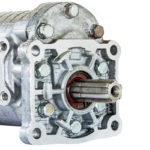
A pump is the heart of a hydraulic system. When the pump fails, the entire system is down until the pump is operational again. This poses a serious threat to any operation relying on hydraulic systems for productivity. Recently, a hydraulic valve manufacturer was losing 25 pumps a year on their centralized hydraulic system at a cost of $2,440 each. … [Read more...] about Filter change proves how costly dirt can be to your hydraulic pump
Contamination Control
Cleanliness and wear monitoring via modern particle-measurement technology
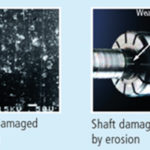
In hydraulic systems, the oil is regarded as a structural element that handles many diverse tasks, according to engineers at ARGO-HYTOS. Hydraulic fluid transmits power, lubricates, transfers heat, and transports dirt to the filters. Although there are many causes for failure in fluid-power systems, the condition of the oil is usually the main … [Read more...] about Cleanliness and wear monitoring via modern particle-measurement technology
MP Filtri highlights updated in-line contamination monitor at IFPE
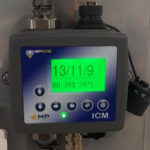
MP Filtri has launched its new ICM-2.0 in-line contamination monitor at IFPE, to allow users to automatically measure and display particulate contamination, moisture and temperature levels in various hydraulic fluids. Company representatives told me that the newest features of this model include the ability to download data via a USB stick with … [Read more...] about MP Filtri highlights updated in-line contamination monitor at IFPE
Where should you locate hydraulic filters in your system?
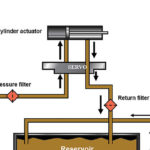
Is there an ideal location for placement of hydraulic filters in an operating system, and if so what is the correct type of filter to use? Is one filter sufficient, or should multiple filters be used? Can different types of filtration be combined? Matt Brown, Product Manager Filter Systems for Schroeder Industries explains that in many cases, … [Read more...] about Where should you locate hydraulic filters in your system?
How does fluid contamination cause components to fail?
Particulate contaminants that are circulating in fluid power systems cause surface degradation through general mechanical wear (abrasion, erosion, and surface fatigue). This wear adds to the problem because it causes increasing numbers of particles to be formed, the result being that wear also continually increases. If this “chain reaction of wear” … [Read more...] about How does fluid contamination cause components to fail?
How do you use Cleanliness Code Charts (ISO 4406)?
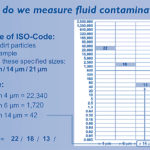
The objective of the ISO 4406:1999 is to classify particulate contaminants in hydraulic fluids. Particle counts are determined cumulatively, i.e. > 4 μm, > 6 μm and > 14 μm, and coded for easy comparison. Matt Brown Product Manager Filter Systems at Schroeder Industries gives the following table as an example. “This explains how the ISO … [Read more...] about How do you use Cleanliness Code Charts (ISO 4406)?
New four-wheel lubrication filter cart
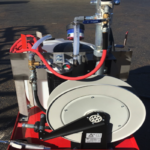
A four-wheel lubrication filter cart is now being offered; the unit features transfer filtered lube oil to equipment components for top off, a kidney loop equipment through on-board filter, and ability to recirculate and filter the on board the 22 gal-storage tank. Other features include: • Filter new oil into the on board storage tank • 25 or … [Read more...] about New four-wheel lubrication filter cart
COT AB launches COT Oil Refiner to eliminate bound and free water from oil
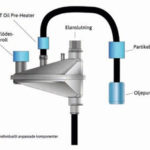
Water contamination in hydraulic oil can cause harmful effects. The water reduces the oil’s viscosity and lubricating function and water does not work in elastohydrodynamic lubrication. What’s worse, water in hydraulic oil will cause corrosion and metal fatigue and form sludge. Oxidation and hydrolysis shorten the oil’s lifespan. The negative … [Read more...] about COT AB launches COT Oil Refiner to eliminate bound and free water from oil
How do you use cleanliness code charts?
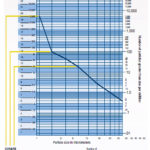
What is a cleanliness code chart? Cleanliness is not a subjective term, but rather a specific quantitative value. Therefore, a cleanliness code chart is a tool whereby a person responsible for the usefulness and longevity of a machine can set a value for ensuring their hydraulic fluid is clean. “The purpose of the code is to standardize and … [Read more...] about How do you use cleanliness code charts?
Is chemical analysis all I need to maintain my hydraulic fluid?
Often, users of hydraulic fluid will confuse a chemical analysis with a complete fluid analysis, which provides particle count of contaminants, amounts of water, and more. Oil samples that are sent off to a lab without specific instructions will return with valuable data but not all the data points you require. In most cases, the majority of labs … [Read more...] about Is chemical analysis all I need to maintain my hydraulic fluid?