• Skip to primary navigation
  • Skip to main content
  • Skip to primary sidebar
  • Skip to footer

Sealing & Contamination Control Tips

Fluid Power Sealing and Contamination Control Information and Resources

  • News
  • Contamination Control
  • Filtration
  • Seals
  • Fluids
  • Design Guides
  • Advertise
  • Subscribe
You are here: Home / Contamination Control / Adsorber filters protect against harmful condensation

Adsorber filters protect against harmful condensation

September 24, 2019 By Ken Korane Leave a Comment

Share

Water in the oil is a serious issue for many hydraulic systems, because it can lead to increased wear and leakage. Adsorber filters which prevent moisture ingress via the tank breather system provide a remedy, according to engineers at HANSA-FLEX, Bremen, Germany.
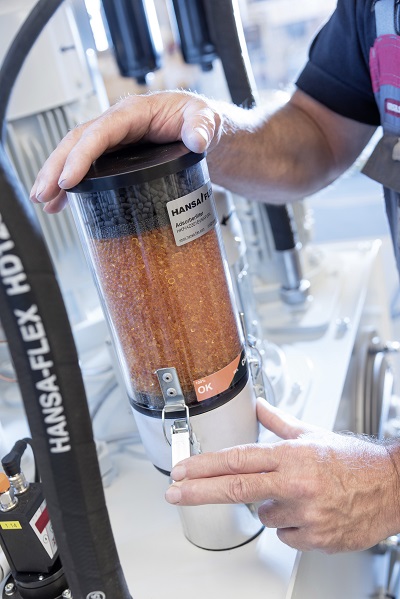
Adsorber filters from HANSA-FLEX keep water vapor out of hydraulic tanks. Silica gel absorbs moisture and the filter changes color to indicate it has reached maximum capacity.

Unfortunately, although these filters can prevent serious damage and high costs, few systems are equipped with them. Operators often mistakenly assume that they don’t need protection against condensation, explained company officials. The fact is, if there is too much water in hydraulic oil, the system is subjected to a number of negative factors: condensation in the oil tank leads to premature aging, for example through hydrolysis. In addition, water attacks metallic surfaces and releases particles that can damage hoses and other components. Seals can also swell or shrink on contact with water and, in turn, permit leaks. Shorter maintenance intervals, high repair requirements and longer downtimes are the result.

Water can enter a hydraulic system in various ways. New oil, for example, may have a higher-than-recommended water content. Moisture can also enter the system through the rod seals of a cylinder. But what many people don’t realize is that the most common entry point is ventilation. Air can hold a sizeable amount of water vapor and it is sucked directly into the tank via the ventilation filter or breather. When the air cools, the moisture it contains condenses on tank surfaces. And because the so-called “dew point temperature” at high humidity is close to the initial temperature, even a slight drop in temperature in the tank is sufficient for condensation to form on the walls and cover. Such temperature fluctuations are a daily occurrence in some systems. The dangerous result quickly becomes visible in the form of droplets and rust.

Adsorber filters are the answer
Adsorber filters can close the access point for moisture that enters the oil via the ventilation system. They are installed on a tank and replace the conventional ventilation filter. Air is drawn in through the cylindrical adsorber filter. Any moisture is absorbed by the silica gel drying agent and bound by its dry granulate. In addition, the integrated 3 µm filter element removes all harmful particles and is the last element before air flows into the tank. The resulting relative humidity is a mere 10%. This lowers the dew point temperature to such an extent that there is no condensation in the tank even with significant temperature fluctuations.

The silica gel has another practical feature: when saturated, it changes color from orange to green — starting at the bottom of the adsorber filter. When the color changes from the top, moisture is absorbed from the inside of the tank and unit achieves effective dehumidification. If the entire adsorber filter is green, it has reached its maximum capacity and must be replaced. A regular visual inspection of the filter is therefore sufficient to ensure that it functions correctly. Adsorber filters also have the advantage that they can be retrofitted without the need to modify the hydraulic system. The work merely requires dismantling the ventilation filter and installing the adsorber filter.

Recommended applications
Adsorber filters protect hydraulic systems from condensation damage, extend maintenance intervals and reduce the risk of unplanned downtime. However, not all systems require dehumidifiers. The environmental conditions are the deciding factor: the warmer the ambient air, the more water it can absorb and then release when it cools in the hydraulic system. Wherever things get hot — for example in tire and roll-material production facilities or foundries — the risk of water damage increases.

The filters come in many versions to suit wide-ranging applications and can be retrofitted without the need to modify the hydraulic system.

The same applies to environments with high relative humidity such as lock drive mechanisms on canals, sewage treatment systems, hydraulic tanks on ships or hydraulic systems in hydroelectric power stations. This is because even small temperature fluctuations are sufficient to trigger condensation.

Regardless of relative humidity and high ambient temperature, strong temperature fluctuations present the greatest potential for damage. If a system is regularly exposed to a temperature difference of 10° C (18° F) or more, condensation will inevitably occur in the hydraulic tank. Particular care must also be taken when using organic oils. These biodegradable fluids have a strong water-attracting (hygroscopic) effect and therefore absorb humidity from the air via their surface even without condensation. The use of an adsorber filter on hydraulic tanks with organic oil is therefore highly recommended.

HANSA-FLEX offers adsorber filters to suit many different systems. These range from inexpensive disposable filters, to refillable adsorber filters with valves for long maintenance intervals, to special designs that meet ATEX 2014 specs or comply with other industry and government regulations.

The optimal solution depends on many different factors. HANSA-FLEX application engineers have, thus, developed a checklist for determining the correct adsorber filter. Numerous components are also available for mounting the filters, including flange adapters, wall brackets, adapters for the simultaneous operation of secondary filter systems and oil-droplet separators.

HANSA-FLEX
www.hansaflexusa.com

Filed Under: Contamination Control, Featured, Filtration, News Tagged With: Hansa-Flex

Reader Interactions

Leave a Reply Cancel reply

Your email address will not be published. Required fields are marked *

This site uses Akismet to reduce spam. Learn how your comment data is processed.

Primary Sidebar

Fluid Power World Digital Editions

Fluid Power World Digital Edition

Browse the most current issue of Fluid Power World and back issues in an easy to use high quality format. Bookmark, share and interact with the leading design engineering magazine today.

Fluid Power Design Guides

fluid
“sact
EXPAND YOUR KNOWLEDGE AND STAY CONNECTED
Get the latest info on technologies, tools and strategies for Fluid Power Professionals.

Meta

  • Log in
  • Entries feed
  • Comments feed
  • WordPress.org

Archives

  • April 2026
  • March 2026
  • February 2026
  • January 2026
  • November 2025
  • October 2025
  • September 2025
  • August 2025
  • July 2025
  • June 2025
  • May 2025
  • April 2025
  • March 2025
  • February 2025
  • January 2025
  • December 2024
  • November 2024
  • October 2024
  • September 2024
  • August 2024
  • July 2024
  • June 2024
  • May 2024
  • April 2024
  • March 2024
  • February 2024
  • January 2024
  • December 2023
  • November 2023
  • October 2023
  • September 2023
  • August 2023
  • July 2023
  • June 2023
  • May 2023
  • April 2023
  • March 2023
  • February 2023
  • January 2023
  • December 2022
  • November 2022
  • October 2022
  • September 2022
  • August 2022
  • July 2022
  • June 2022
  • May 2022
  • April 2022
  • March 2022
  • February 2022
  • January 2022
  • December 2021
  • November 2021
  • October 2021
  • September 2021
  • August 2021
  • July 2021
  • June 2021
  • May 2021
  • April 2021
  • March 2021
  • February 2021
  • January 2021
  • December 2020
  • November 2020
  • October 2020
  • September 2020
  • August 2020
  • July 2020
  • June 2020
  • May 2020
  • April 2020
  • March 2020
  • February 2020
  • January 2020
  • December 2019
  • November 2019
  • October 2019
  • September 2019
  • August 2019
  • July 2019
  • June 2019
  • May 2019
  • April 2019
  • March 2019
  • February 2019
  • January 2019
  • December 2018
  • November 2018
  • October 2018
  • September 2018
  • August 2018
  • July 2018
  • June 2018
  • May 2018
  • April 2018
  • March 2018
  • February 2018
  • January 2018
  • December 2017
  • November 2017
  • October 2017
  • September 2017
  • August 2017
  • July 2017
  • June 2017
  • May 2017
  • April 2017
  • March 2017
  • February 2017
  • January 2017
  • December 2016
  • November 2016
  • October 2016
  • September 2016
  • August 2016
  • July 2016
  • June 2016
  • May 2016
  • April 2016
  • March 2016
  • February 2016
  • January 2016
  • December 2015
  • November 2015
  • September 2015
  • August 2015
  • July 2015
  • June 2015

Recent Comments

  • Are clogged hydraulic filters better? | Sealing & Contamination Control Tips on What types of hydraulic filters are available?

Categories

  • Blogs
  • Contamination Control
  • Featured
  • Filtration
  • Fluids
  • Mobile Hydraulic Tips
  • News
  • Products
  • Seals
  • tanks and reservois
  • Testing Equipment
  • Uncategorized

Recent Comments

  • Are clogged hydraulic filters better? | Sealing & Contamination Control Tips on What types of hydraulic filters are available?

Archives

  • April 2026
  • March 2026
  • February 2026
  • January 2026
  • November 2025
  • October 2025
  • September 2025
  • August 2025
  • July 2025
  • June 2025
  • May 2025
  • April 2025
  • March 2025
  • February 2025
  • January 2025
  • December 2024
  • November 2024
  • October 2024
  • September 2024
  • August 2024
  • July 2024
  • June 2024
  • May 2024
  • April 2024
  • March 2024
  • February 2024
  • January 2024
  • December 2023
  • November 2023
  • October 2023
  • September 2023
  • August 2023
  • July 2023
  • June 2023
  • May 2023
  • April 2023
  • March 2023
  • February 2023
  • January 2023
  • December 2022
  • November 2022
  • October 2022
  • September 2022
  • August 2022
  • July 2022
  • June 2022
  • May 2022
  • April 2022
  • March 2022
  • February 2022
  • January 2022
  • December 2021
  • November 2021
  • October 2021
  • September 2021
  • August 2021
  • July 2021
  • June 2021
  • May 2021
  • April 2021
  • March 2021
  • February 2021
  • January 2021
  • December 2020
  • November 2020
  • October 2020
  • September 2020
  • August 2020
  • July 2020
  • June 2020
  • May 2020
  • April 2020
  • March 2020
  • February 2020
  • January 2020
  • December 2019
  • November 2019
  • October 2019
  • September 2019
  • August 2019
  • July 2019
  • June 2019
  • May 2019
  • April 2019
  • March 2019
  • February 2019
  • January 2019
  • December 2018
  • November 2018
  • October 2018
  • September 2018
  • August 2018
  • July 2018
  • June 2018
  • May 2018
  • April 2018
  • March 2018
  • February 2018
  • January 2018
  • December 2017
  • November 2017
  • October 2017
  • September 2017
  • August 2017
  • July 2017
  • June 2017
  • May 2017
  • April 2017
  • March 2017
  • February 2017
  • January 2017
  • December 2016
  • November 2016
  • October 2016
  • September 2016
  • August 2016
  • July 2016
  • June 2016
  • May 2016
  • April 2016
  • March 2016
  • February 2016
  • January 2016
  • December 2015
  • November 2015
  • September 2015
  • August 2015
  • July 2015
  • June 2015

Categories

  • Blogs
  • Contamination Control
  • Featured
  • Filtration
  • Fluids
  • Mobile Hydraulic Tips
  • News
  • Products
  • Seals
  • tanks and reservois
  • Testing Equipment
  • Uncategorized

Meta

  • Log in
  • Entries feed
  • Comments feed
  • WordPress.org

Footer

Sealing and Contamination Tips

Fluid Power World Digital Network

  • Fluid Power World
  • Mobile Hydraulic Tips
  • Pneumatic Tips
  • Hose Assembly Tips
  • Leadership in Engineering

Sealing & Contamination Control

  • Subscribe to Fluid Power World
  • Videos
  • Advertise with us
  • About us

Copyright © 2026 · WTWH Media, LLC · Privacy Policy