• Skip to primary navigation
  • Skip to main content
  • Skip to primary sidebar
  • Skip to footer

Sealing & Contamination Control Tips

Fluid Power Sealing and Contamination Control Information and Resources

  • News
  • Contamination Control
  • Filtration
  • Seals
  • Fluids
  • Design Guides
  • Advertise
  • Subscribe
You are here: Home / Blogs / Optimizing hydraulic operations with the use of energy-efficient hydraulic fluids

Optimizing hydraulic operations with the use of energy-efficient hydraulic fluids

August 25, 2021 By Mary Gannon Leave a Comment

Share

The right lubricants can improve profitability, productivity and sustainability.

Contributed by Blayne McKenzie, Strategic Technology Manager, Industrial Products, The Lubrizol Corp.

Procurement decisions in almost any market you can imagine are driven primarily by one or more of the following three factors: profitability, productivity and sustainability. In the rapidly evolving world of hydraulic equipment, hardware is changing quickly to meet demands for more throughput on both mobile and stationary equipment. This requires each system component to operate under ever more challenging circumstances. But it is not just the hardware that is changing — hydraulic lubricants must also change in lockstep with the hardware. After all, the evolving equipment is operating at higher operational speeds and pressures, increasing use of electronic control, greater precision and accuracy, and more compact systems that demand smaller lubricant sump capacity.

Figure 1. As a result of its distinct molecular structure, Lucant lowers the number of parasitic losses that occur when fluid flows around bends, twists and turns, or through valves, filters and other nonlinear hardware flow paths. This image illustrates a secondary flow field (denoted by the arrows) as a fluid navigates a 90° bend in a pipe.

In light of the rapidly changing equipment requirements, one thing remains constant: Facilities cannot afford the effects on profitability of unplanned downtime. To prevent that from happening, lubricants also must not fail. Lubrizol’s research has focused on creating a total hydraulic solution by combining industry-known, durable additive chemistry with shear-stable, energy-efficient polymers. This combination of chemistries improves profitability through reduced fuel and energy costs; productivity by keeping equipment in working order more consistently; and sustainability by reducing energy consumption and carbon dioxide emissions—all while maximizing lubricant durability.

Passing the test
No lubricant can enter the market without passing a series of standardized bench and OEM hardware tests. Having accomplished both of those milestones, Lubrizol 5703 has established itself as a well-known additive package. Then Lubrizol’s hydraulic fluid development team combined it with a specially designed performance polymer called Lucant, which helped maintain durability in the Eaton 35VQ vane pump test. The end-of-test weight loss measurement clearly stays within the published test limit (Figure 2).
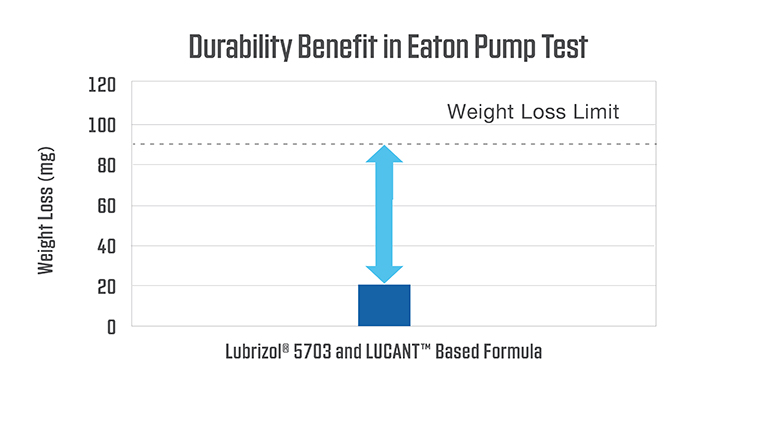
Figure 2. Adding a specially designed performance polymer called Lucant helped maintain durability in the Eaton 35VQ vane pump test. The end-of-test weight loss measurement clearly stays within the published test limit.

In addition to providing critical wear protection, Lubrizol’s hydraulic energy-efficient offering also delivers lower operating temperatures by up to 17% in industry pump rig testing. This additional benefit is a consequence of reduced fluid friction, or traction, delivered by the Lucant line of performance polymers.

We have evaluated the traction coefficient of a commercially available HF-0 approved multigrade fluid and compared its frictional properties to Lubrizol’s efficient HV (multigrade) solution. By deploying molecules known to reduce fluid friction, in this example by as much as 9%, reduced operating temperatures and greater fluid flow through the network of pipes and bends of a hydraulic system can be realized.

With cooler-running hydraulic systems comes related oil-drain life-increasing performance. One indicator of the real-world ramifications of reduced operating temperature is the generation of oxidation products, such as sludge. Lubrizol’s enhanced thermal stability performance reduced sludge. In an industry-standard sludge test, a 96% reduction in sludge was observed, offering another example of extended oil life and system durability.
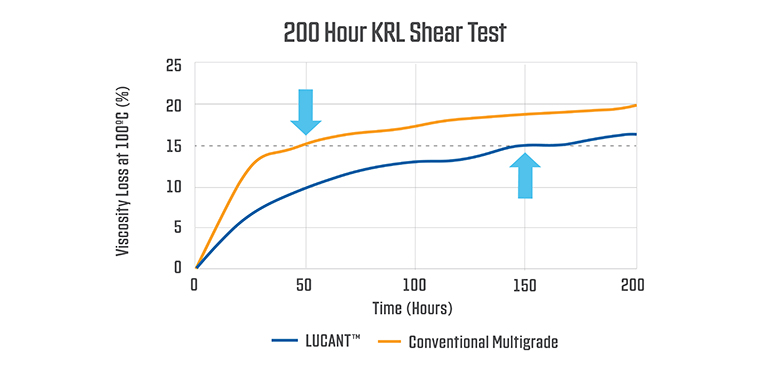
Figure 3. The 200-hour KRL bearing shear test data proves the improved shear performance of Lubrizol’s total hydraulic solution, as it stayed well below the 15% viscosity loss threshold three times longer than a conventional multigrade hydraulic lubricant.

As companies decide whether to change from a monograde hydraulic fluid to a multigrade one, they must consider the stay-in-grade shear stability of the viscosity modifier. In the case of Lucant, that means it not only maintains appropriate multigrade, low-temperature performance while staying durable, but it also offers more protection than more conventional multigrade viscosity modifiers. In Figure 3, the 200-hour KRL bearing shear test data proves the improved shear performance of Lubrizol’s total hydraulic solution. As can be seen, it stayed well below the 15% viscosity loss threshold three times longer than a conventional multigrade hydraulic lubricant.

Saving energy saves money
To confirm and quantify the energy savings, Lubrizol authorized real-world field trials. Using an off-highway wheel loader, a mobile field trial showed diesel fuel savings of 1.4% to 2.7% depending on when and where it was used, as well as the ambient temperature of the air (Figure 4). It also tested its combined fluid in a stationary hydraulic injection molding machine, where the Lucant-containing lubricant showed an 8.5% reduction in electricity consumption (Figure 5).
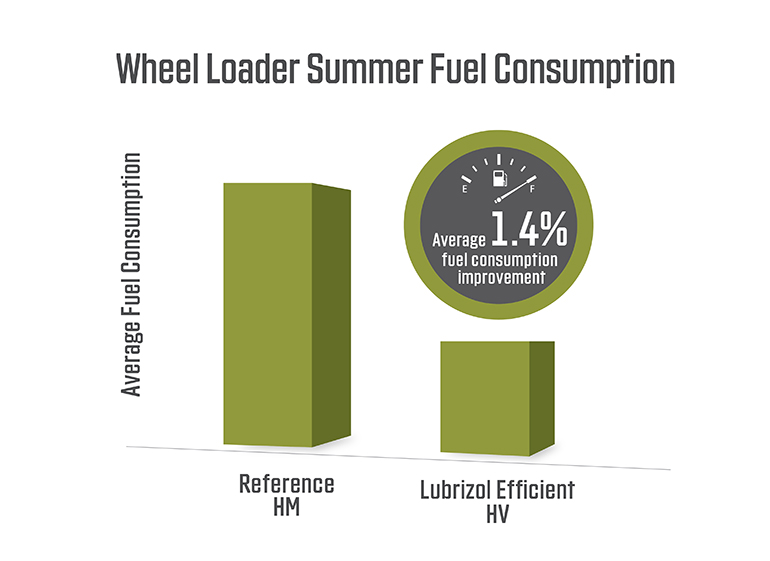
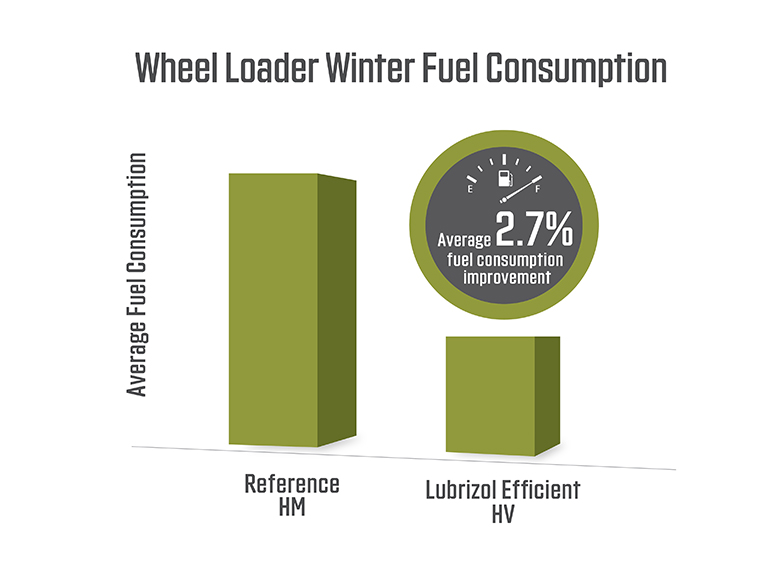
Figure 4. A mobile field trial showed diesel fuel savings of 1.4% to 2.7% depending on when and where it was used, as well as the ambient temperature of the air.
Figure 4. A mobile field trial showed diesel fuel savings of 1.4% to 2.7% depending on when and where it was used, as well as the ambient temperature of the air, in summer here, and below, in winter.

Confirmation comes in the lab
Though the field trial results were certainly promising, confirmation from lab results were in order. Lubrizol’s hydraulic fluid development team set out to run other experiments in a controlled lab environment, specifically to eliminate the constraints and variables inherent to field testing. To that end, the team created Lubrizol’s Total Hydraulic System Efficiency Rig, which did just that. Originally designed to imitate a real-world skid steer, the rig also contains the essential elements of a hydraulic system. In addition to hydraulic pipes, hoses, and valves, the rig incorporates an off-the-shelf commercial piston pump that supplies a hydraulic circuit. In addition, the rig can be configured in different ways because of its modular design, which allows for more extensive testing than can be done in field tests. Efficiency testing, done over the prescribed condition set, was designed to capture the diverse duty cycles and system requirements of a skid steer.
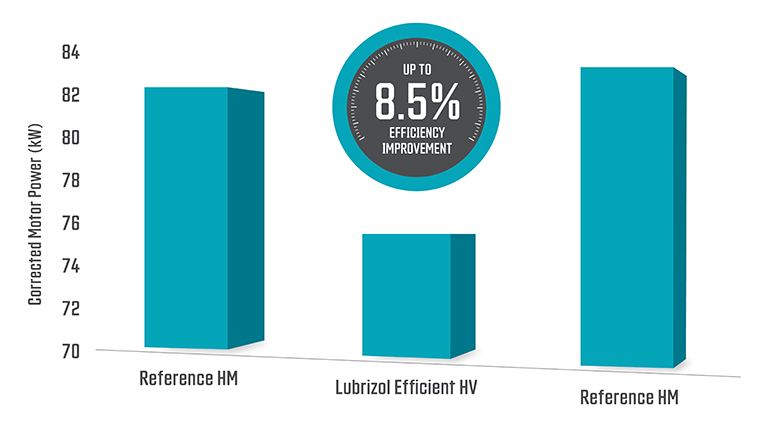
Figure 5. Tests were also done in a stationary hydraulic injection molding machine, where the Lucant-containing lubricant showed an 8.5% reduction in electricity consumption.

The rig was provided a significant number of flow, pressure, and temperature sensors, which allowed researchers to do exhaustive future-looking hydraulic efficiency research. First, however, it was used to corroborate the efficiency gains seen in the field with the use of Lucant and Lubrizol 5703. In Figure 6, it can be seen that the Lucant fluid improved efficiencies over both a monograde (3.8% better) and a conventional multigrade lubricant (1.6% better).

How does it work?
Lubrizol 5703, combined with the Lucant performance polymer, provides substantial efficiency gains both in the field and in the lab, but at a molecular level, what is its mode of action? Lubrizol, in partnership with university researchers, discovered that it presents unusual performance benefits that are not available in other more conventional hydraulic viscosity modifiers. As a result of its distinct molecular structure, Lucant lowers the number of parasitic losses that occur when fluid flows around bends, twists and turns, or through valves, filters and other nonlinear hardware flow paths. Figure 1 illustrates a secondary flow field (denoted by the arrows) as a fluid navigates a 90° bend.
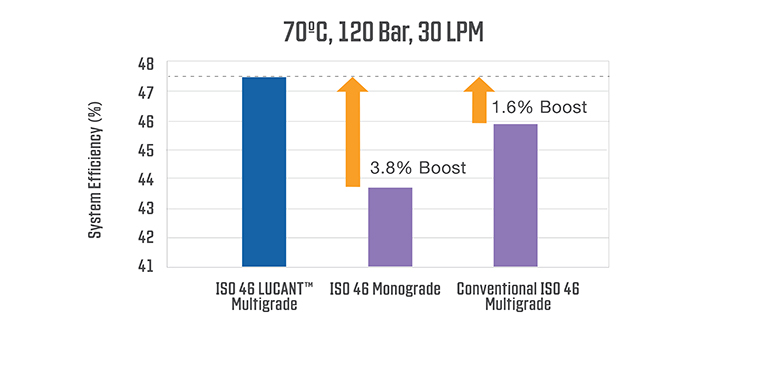
Figure 6. The Lucant fluid improved efficiencies over both a monograde (3.8% better) and a conventional multigrade lubricant (1.6% better).

While conventional hydraulic viscosity modifiers do not always reduce the intensity of these secondary flow vortices effectively, Lucant can and does by forming small, flexible chains with respect to their overall contour length. Its large extensibility parameter provides viscoelastic behavior. In contrast, conventional viscosity modifiers contain long sidechains and short backbones to prevent tight coiling and reduce flexibility. Those characteristics reduce their extensibility and provide no detectable viscoelastic effect. Lucant’s viscoelastic chains accumulate and remove energy from the coherent vortices, which lead to their decay. 

Lubrizol’s Total Hydraulic System Efficiency Rig was designed to imitate a real-world skid steer. It also contains the essential elements of a hydraulic system, such as hydraulic pipes, hoses, and valves, as well as an off-the-shelf commercial piston pump that supplies a hydraulic circuit.

Reducing fuel consumption is the key to saving money over the long term, and Lubrizol’s total hydraulic solution helps reach those monetary goals through reduced fuel consumption in mobile equipment and electricity savings in stationary systems. That is not the only savings it produces, however — it can also help save the Earth. Using a total hydraulic solution can combat climate change by reducing carbon dioxide and resource consumption, thereby improving the environment for future generations and promoting greater sustainability within the lubricant industry itself.

Lubrizol
Lubrizol.com

You may also like:

  • water in hydraulic fluid
    How does water impact hydraulic fluid?

  • What are ionic hydraulic fluids?

  • What is the Varnish Potential Rating?
  • lubrizol hydraulic fluid additives iStock-453804283_SMALL
    Hassle-free path to clean-running hydraulics

  • What functions do hydraulic fluids perform in a system?

Filed Under: Blogs, Featured, Fluids Tagged With: lubrizol

Reader Interactions

Leave a Reply Cancel reply

Your email address will not be published. Required fields are marked *

This site uses Akismet to reduce spam. Learn how your comment data is processed.

Primary Sidebar

Fluid Power World Digital Editions

Fluid Power World Digital Edition

Browse the most current issue of Fluid Power World and back issues in an easy to use high quality format. Bookmark, share and interact with the leading design engineering magazine today.

Fluid Power Design Guides

fluid
“sact
EXPAND YOUR KNOWLEDGE AND STAY CONNECTED
Get the latest info on technologies, tools and strategies for Fluid Power Professionals.

Meta

  • Log in
  • Entries feed
  • Comments feed
  • WordPress.org

Archives

  • April 2026
  • March 2026
  • February 2026
  • January 2026
  • November 2025
  • October 2025
  • September 2025
  • August 2025
  • July 2025
  • June 2025
  • May 2025
  • April 2025
  • March 2025
  • February 2025
  • January 2025
  • December 2024
  • November 2024
  • October 2024
  • September 2024
  • August 2024
  • July 2024
  • June 2024
  • May 2024
  • April 2024
  • March 2024
  • February 2024
  • January 2024
  • December 2023
  • November 2023
  • October 2023
  • September 2023
  • August 2023
  • July 2023
  • June 2023
  • May 2023
  • April 2023
  • March 2023
  • February 2023
  • January 2023
  • December 2022
  • November 2022
  • October 2022
  • September 2022
  • August 2022
  • July 2022
  • June 2022
  • May 2022
  • April 2022
  • March 2022
  • February 2022
  • January 2022
  • December 2021
  • November 2021
  • October 2021
  • September 2021
  • August 2021
  • July 2021
  • June 2021
  • May 2021
  • April 2021
  • March 2021
  • February 2021
  • January 2021
  • December 2020
  • November 2020
  • October 2020
  • September 2020
  • August 2020
  • July 2020
  • June 2020
  • May 2020
  • April 2020
  • March 2020
  • February 2020
  • January 2020
  • December 2019
  • November 2019
  • October 2019
  • September 2019
  • August 2019
  • July 2019
  • June 2019
  • May 2019
  • April 2019
  • March 2019
  • February 2019
  • January 2019
  • December 2018
  • November 2018
  • October 2018
  • September 2018
  • August 2018
  • July 2018
  • June 2018
  • May 2018
  • April 2018
  • March 2018
  • February 2018
  • January 2018
  • December 2017
  • November 2017
  • October 2017
  • September 2017
  • August 2017
  • July 2017
  • June 2017
  • May 2017
  • April 2017
  • March 2017
  • February 2017
  • January 2017
  • December 2016
  • November 2016
  • October 2016
  • September 2016
  • August 2016
  • July 2016
  • June 2016
  • May 2016
  • April 2016
  • March 2016
  • February 2016
  • January 2016
  • December 2015
  • November 2015
  • September 2015
  • August 2015
  • July 2015
  • June 2015

Recent Comments

    Categories

    • Blogs
    • Contamination Control
    • Featured
    • Filtration
    • Fluids
    • Mobile Hydraulic Tips
    • News
    • Products
    • Seals
    • tanks and reservois
    • Testing Equipment
    • Uncategorized

    Recent Comments

      Archives

      • April 2026
      • March 2026
      • February 2026
      • January 2026
      • November 2025
      • October 2025
      • September 2025
      • August 2025
      • July 2025
      • June 2025
      • May 2025
      • April 2025
      • March 2025
      • February 2025
      • January 2025
      • December 2024
      • November 2024
      • October 2024
      • September 2024
      • August 2024
      • July 2024
      • June 2024
      • May 2024
      • April 2024
      • March 2024
      • February 2024
      • January 2024
      • December 2023
      • November 2023
      • October 2023
      • September 2023
      • August 2023
      • July 2023
      • June 2023
      • May 2023
      • April 2023
      • March 2023
      • February 2023
      • January 2023
      • December 2022
      • November 2022
      • October 2022
      • September 2022
      • August 2022
      • July 2022
      • June 2022
      • May 2022
      • April 2022
      • March 2022
      • February 2022
      • January 2022
      • December 2021
      • November 2021
      • October 2021
      • September 2021
      • August 2021
      • July 2021
      • June 2021
      • May 2021
      • April 2021
      • March 2021
      • February 2021
      • January 2021
      • December 2020
      • November 2020
      • October 2020
      • September 2020
      • August 2020
      • July 2020
      • June 2020
      • May 2020
      • April 2020
      • March 2020
      • February 2020
      • January 2020
      • December 2019
      • November 2019
      • October 2019
      • September 2019
      • August 2019
      • July 2019
      • June 2019
      • May 2019
      • April 2019
      • March 2019
      • February 2019
      • January 2019
      • December 2018
      • November 2018
      • October 2018
      • September 2018
      • August 2018
      • July 2018
      • June 2018
      • May 2018
      • April 2018
      • March 2018
      • February 2018
      • January 2018
      • December 2017
      • November 2017
      • October 2017
      • September 2017
      • August 2017
      • July 2017
      • June 2017
      • May 2017
      • April 2017
      • March 2017
      • February 2017
      • January 2017
      • December 2016
      • November 2016
      • October 2016
      • September 2016
      • August 2016
      • July 2016
      • June 2016
      • May 2016
      • April 2016
      • March 2016
      • February 2016
      • January 2016
      • December 2015
      • November 2015
      • September 2015
      • August 2015
      • July 2015
      • June 2015

      Categories

      • Blogs
      • Contamination Control
      • Featured
      • Filtration
      • Fluids
      • Mobile Hydraulic Tips
      • News
      • Products
      • Seals
      • tanks and reservois
      • Testing Equipment
      • Uncategorized

      Meta

      • Log in
      • Entries feed
      • Comments feed
      • WordPress.org

      Footer

      Sealing and Contamination Tips

      Fluid Power World Digital Network

      • Fluid Power World
      • Mobile Hydraulic Tips
      • Pneumatic Tips
      • Hose Assembly Tips
      • Leadership in Engineering

      Sealing & Contamination Control

      • Subscribe to Fluid Power World
      • Videos
      • Advertise with us
      • About us

      Copyright © 2026 · WTWH Media, LLC · Privacy Policy