• Skip to primary navigation
  • Skip to main content
  • Skip to primary sidebar
  • Skip to footer

Sealing & Contamination Control Tips

Fluid Power Sealing and Contamination Control Information and Resources

  • News
  • Contamination Control
  • Filtration
  • Seals
  • Fluids
  • Design Guides
  • Advertise
  • Subscribe
You are here: Home / Contamination Control / What are the least common symptoms of contamination?

What are the least common symptoms of contamination?

May 18, 2023 By Mary Gannon Leave a Comment

Share

By Josh Cosford, Contributing Editor

Hydraulic oil contamination may cause significant damage to hydraulic systems and components, leading to reduced performance and productivity and increased maintenance and repair costs. Therefore, it’s crucial that you identify the symptoms of hydraulic oil contamination to prevent further damage and ensure optimal hydraulic system operation. Regular readers know how much I preach the importance of hydraulic fluid cleanliness programs, including mitigating contamination. We all know contamination causes excessive and premature wear, but what are the less common contamination symptoms?

One symptom of hydraulic oil contamination is increased noise and vibration levels. When the oil is contaminated, it loses its lubricity, leading to increased friction and wear between the hydraulic components in your system, such as the pump’s rotating group against its housing or wear components. The asperities across the worn parts cause localized noise, chatter, and vibration above and beyond the usual noise generated by pumps and other components.
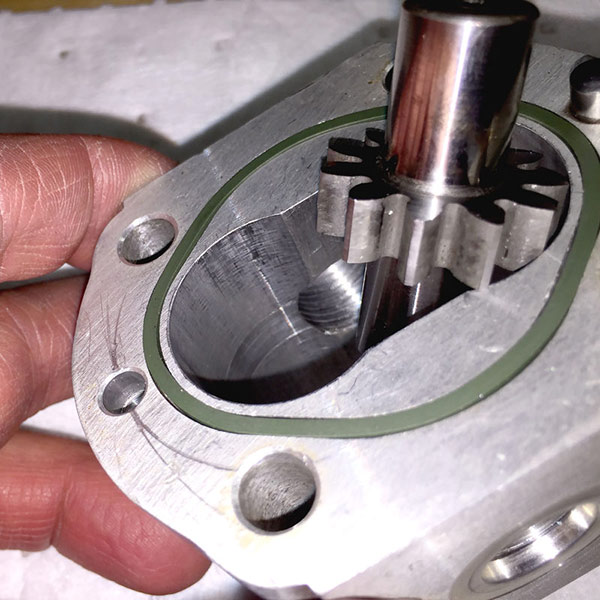
Oil contamination can damage internal components, like the damage seen on this gear pump. The increased friction and wear between the pump’s rotating group against its housing or wear components can cause localized noise, chatter, and vibration above and beyond the usual noise generated by pumps and other components. Image courtesy of CD Industrial Group/LunchBox Sessions
Oil contamination can damage internal components, like the damage seen on this gear pump. The increased friction and wear between the pump’s rotating group against its housing or wear components can cause localized noise, chatter, and vibration above and beyond the usual noise generated by pumps and other components. 
Image courtesy of CD Industrial Group/LunchBox Sessions

Although likely noise increases slowly over time as components become worn or scored, sometimes the rapid rise of offensive sounds signals the pump or motor are not long for this world. Awareness of your hydraulic system’s typical sound signature provides you with an advanced warning to allow maintenance staff to step in before complete failure occurs.

Hydraulic systems rely on clean hydraulic oil to best take advantage of input energy from the prime mover. However, when the oil is contaminated, it causes a reduction in performance as gaps and clearances open up between the precise pistons, spools, vanes or other parts. The increased clearances result in slower movement, less force, and reduced precision because fluid lost to leakage is wasted as pure heat. Such reductions in efficiency reduce productivity and increase energy consumption while hot oil bypasses to the reservoir rather than the actuators.

Paying attention to your hydraulic oil’s color also provides contamination insight. When hydraulic oil is contaminated with water, it may change color or appear foggy, which are sure signs that excessive saturation has taken hold. However, the oil may also appear darker brown color if oxidation burned the oil or resulted in circulating sludge. If you notice any discoloration, it is essential to have the oil tested to determine the source of the contamination and then correct the problem before it’s not too late.

If hydraulic oil appears a darker brown color, oxidation may have burned the oil or resulted in circulating sludge. If you notice any discoloration, it is essential to have the oil tested to determine the source of the contamination and correct the problem before it’s not too late.Image courtesy of CD Industrial Group/LunchBox Sessions
If hydraulic oil appears a darker brown color, oxidation may have burned the oil or resulted in circulating sludge. If you notice any discoloration, it is essential to have the oil tested to determine the source of the contamination and correct the problem before it’s not too late.
Image courtesy of CD Industrial Group/LunchBox Sessions

In addition to color change, contaminated hydraulic oil may emit a foul odor. This odor indicates your oil is contaminated with bacteria, which can cause further damage to the hydraulic oil, or even the system components, if left unchecked. Bacterial contamination is more common in water-based fluids, although it may still occur in mineral-based oil highly saturated with water.

Hydraulic oil contamination is the number one cause of damage to hydraulic systems and components, leading to reduced performance, increased maintenance and repair costs, and safety hazards. Therefore, it’s essential to identify the most common symptoms of hydraulic oil contamination and take steps to prevent further damage. If you notice any of the symptoms listed above, it is important to have the oil tested and to take corrective action to address the contamination. In addition, regular oil analysis and maintenance can help prevent contamination and ensure optimal hydraulic system operation.

You may also like:

  • Hydraulic fluids on mobile machinery temperature
    Why modern equipment can benefit from higher-performance hydraulic fluids
  • Figure 1. As a result of its distinct molecular structure, Lucant lowers the number of parasitic losses that occur when fluid flows around bends, twists and turns, or through valves, filters and other nonlinear hardware flow paths. This image illustrates a secondary flow field (denoted by the arrows) as a fluid navigates a 90° bend in a pipe.
    Optimizing hydraulic operations with the use of energy-efficient hydraulic fluids
  • Tag-Out-Maintenance
    Has contamination turned your maintenance department into the emergency repair…
  • Hydraulic symbology 304 - Figure 1 Filters
    Hydraulic Symbology 304 – conditioning and monitoring
  • IFPE Paul Michael hydraulic fluids course Man-working-underneath-machine
    A review of hydraulic fluids and contamination control
  • The best way to remove emulsified or dissolved water from hydraulic oil is through vacuum dehydration. VUD vacuum dehydrator image courtesy of Hy-Pro Filtration
    How do you remove water from your hydraulic system?

Filed Under: Contamination Control, Featured, Filtration, Fluids

Reader Interactions

Leave a Reply Cancel reply

Your email address will not be published. Required fields are marked *

This site uses Akismet to reduce spam. Learn how your comment data is processed.

Primary Sidebar

Fluid Power World Digital Editions

Fluid Power World Digital Edition

Browse the most current issue of Fluid Power World and back issues in an easy to use high quality format. Bookmark, share and interact with the leading design engineering magazine today.

Fluid Power Design Guides

fluid
“sact
EXPAND YOUR KNOWLEDGE AND STAY CONNECTED
Get the latest info on technologies, tools and strategies for Fluid Power Professionals.

Meta

  • Log in
  • Entries feed
  • Comments feed
  • WordPress.org

Archives

  • April 2026
  • March 2026
  • February 2026
  • January 2026
  • November 2025
  • October 2025
  • September 2025
  • August 2025
  • July 2025
  • June 2025
  • May 2025
  • April 2025
  • March 2025
  • February 2025
  • January 2025
  • December 2024
  • November 2024
  • October 2024
  • September 2024
  • August 2024
  • July 2024
  • June 2024
  • May 2024
  • April 2024
  • March 2024
  • February 2024
  • January 2024
  • December 2023
  • November 2023
  • October 2023
  • September 2023
  • August 2023
  • July 2023
  • June 2023
  • May 2023
  • April 2023
  • March 2023
  • February 2023
  • January 2023
  • December 2022
  • November 2022
  • October 2022
  • September 2022
  • August 2022
  • July 2022
  • June 2022
  • May 2022
  • April 2022
  • March 2022
  • February 2022
  • January 2022
  • December 2021
  • November 2021
  • October 2021
  • September 2021
  • August 2021
  • July 2021
  • June 2021
  • May 2021
  • April 2021
  • March 2021
  • February 2021
  • January 2021
  • December 2020
  • November 2020
  • October 2020
  • September 2020
  • August 2020
  • July 2020
  • June 2020
  • May 2020
  • April 2020
  • March 2020
  • February 2020
  • January 2020
  • December 2019
  • November 2019
  • October 2019
  • September 2019
  • August 2019
  • July 2019
  • June 2019
  • May 2019
  • April 2019
  • March 2019
  • February 2019
  • January 2019
  • December 2018
  • November 2018
  • October 2018
  • September 2018
  • August 2018
  • July 2018
  • June 2018
  • May 2018
  • April 2018
  • March 2018
  • February 2018
  • January 2018
  • December 2017
  • November 2017
  • October 2017
  • September 2017
  • August 2017
  • July 2017
  • June 2017
  • May 2017
  • April 2017
  • March 2017
  • February 2017
  • January 2017
  • December 2016
  • November 2016
  • October 2016
  • September 2016
  • August 2016
  • July 2016
  • June 2016
  • May 2016
  • April 2016
  • March 2016
  • February 2016
  • January 2016
  • December 2015
  • November 2015
  • September 2015
  • August 2015
  • July 2015
  • June 2015

Recent Comments

  • Are clogged hydraulic filters better? | Sealing & Contamination Control Tips on What types of hydraulic filters are available?

Categories

  • Blogs
  • Contamination Control
  • Featured
  • Filtration
  • Fluids
  • Mobile Hydraulic Tips
  • News
  • Products
  • Seals
  • tanks and reservois
  • Testing Equipment
  • Uncategorized

Recent Comments

  • Are clogged hydraulic filters better? | Sealing & Contamination Control Tips on What types of hydraulic filters are available?

Archives

  • April 2026
  • March 2026
  • February 2026
  • January 2026
  • November 2025
  • October 2025
  • September 2025
  • August 2025
  • July 2025
  • June 2025
  • May 2025
  • April 2025
  • March 2025
  • February 2025
  • January 2025
  • December 2024
  • November 2024
  • October 2024
  • September 2024
  • August 2024
  • July 2024
  • June 2024
  • May 2024
  • April 2024
  • March 2024
  • February 2024
  • January 2024
  • December 2023
  • November 2023
  • October 2023
  • September 2023
  • August 2023
  • July 2023
  • June 2023
  • May 2023
  • April 2023
  • March 2023
  • February 2023
  • January 2023
  • December 2022
  • November 2022
  • October 2022
  • September 2022
  • August 2022
  • July 2022
  • June 2022
  • May 2022
  • April 2022
  • March 2022
  • February 2022
  • January 2022
  • December 2021
  • November 2021
  • October 2021
  • September 2021
  • August 2021
  • July 2021
  • June 2021
  • May 2021
  • April 2021
  • March 2021
  • February 2021
  • January 2021
  • December 2020
  • November 2020
  • October 2020
  • September 2020
  • August 2020
  • July 2020
  • June 2020
  • May 2020
  • April 2020
  • March 2020
  • February 2020
  • January 2020
  • December 2019
  • November 2019
  • October 2019
  • September 2019
  • August 2019
  • July 2019
  • June 2019
  • May 2019
  • April 2019
  • March 2019
  • February 2019
  • January 2019
  • December 2018
  • November 2018
  • October 2018
  • September 2018
  • August 2018
  • July 2018
  • June 2018
  • May 2018
  • April 2018
  • March 2018
  • February 2018
  • January 2018
  • December 2017
  • November 2017
  • October 2017
  • September 2017
  • August 2017
  • July 2017
  • June 2017
  • May 2017
  • April 2017
  • March 2017
  • February 2017
  • January 2017
  • December 2016
  • November 2016
  • October 2016
  • September 2016
  • August 2016
  • July 2016
  • June 2016
  • May 2016
  • April 2016
  • March 2016
  • February 2016
  • January 2016
  • December 2015
  • November 2015
  • September 2015
  • August 2015
  • July 2015
  • June 2015

Categories

  • Blogs
  • Contamination Control
  • Featured
  • Filtration
  • Fluids
  • Mobile Hydraulic Tips
  • News
  • Products
  • Seals
  • tanks and reservois
  • Testing Equipment
  • Uncategorized

Meta

  • Log in
  • Entries feed
  • Comments feed
  • WordPress.org

Footer

Sealing and Contamination Tips

Fluid Power World Digital Network

  • Fluid Power World
  • Mobile Hydraulic Tips
  • Pneumatic Tips
  • Hose Assembly Tips
  • Leadership in Engineering

Sealing & Contamination Control

  • Subscribe to Fluid Power World
  • Videos
  • Advertise with us
  • About us

Copyright © 2026 · WTWH Media, LLC · Privacy Policy