Without adequate lubrication, hydraulic components will fail, falling victim to excessive friction, heat, particle contamination and more.
By Josh Cosford, Contributing Editor

Hydraulic fluid is a multi-talented medium bringing more to the plate than just the transfer of force. Hydraulic fluid also helps with cooling, contamination removal and sealing. However, those three are tertiary, with lubrication taking secondary importance in purpose. Without adequately lubricated components, those friction-producing components won’t last minutes, making the primary purpose moot.
The basics on lubrication
Most of you reading this are not tribologists, so let me prime you on the principles of lubrication. The essentials of lubrication are based on preventing or reducing friction and wear caused by two components in relative motion. The control of friction and wear also reduces the potential for damaging heat and particles, which as I mentioned earlier, are two forms of contamination hydraulic fluid helps to control even with healthy lubrication.
There exist three primary forms of lubrication; boundary, full film, and mixed. Boundary lubrication is when there is just enough fluid present on the moving surfaces to transfer additives to the metal surfaces, of which these additives will take the brunt of the friction and wear, saving the metal below. Boundary lubrication allows the most friction and wear, but is often engineered as a function of the components, especially where replaceable plates or bushings exist.
Full film lubrication is the physical support and separation of both surfaces by a hydrodynamic layer of fluid; essentially a fluid bearing. In fluid power applications, the pressure present from hydraulics helps increase the potential for full film lubrication, as the fluid itself can support a higher load. When possible, full film lubrication is best, since little or none of the asperities will hit each other, preventing excess wear, heat and contamination.
Mixed lubrication is a combination of boundary and full film lubrication, where the two components are primarily supported with liquid, but there is still some contact between the asperities on each surface. Mixed lubrication requires a quality additive package to help when near-boundary conditions occur, especially as the fluid viscosity lowers.
Each form of lubrication exists in hydraulic systems, from pumps and motors to valves and cylinders. However, in most cases, full film lubrication is desired and most effective at preventing friction and wear. Because of the high pressure in hydraulic systems, forces against pistons, valve plates and bushings, for example, can be extraordinarily high. These forces can be used for or against a hydraulic component, which is why design must be intelligent.
Lubricating the complexity of piston pumps
The most demanding components to keep lubricated are piston pumps and motors, and not just because of the high potential for force and subsequent friction and wear. Piston pumps and motors have myriad moving and sliding components, especially compared to a gear pump. There are control and bias pistons to control swashplate angle, reciprocating pistons inside of a rotating block where the pistons slide around and across a swashplate, and then there are the bearings or bushings supporting the whole assembly. Each of these components and surfaces requires full film lubrication, where possible.
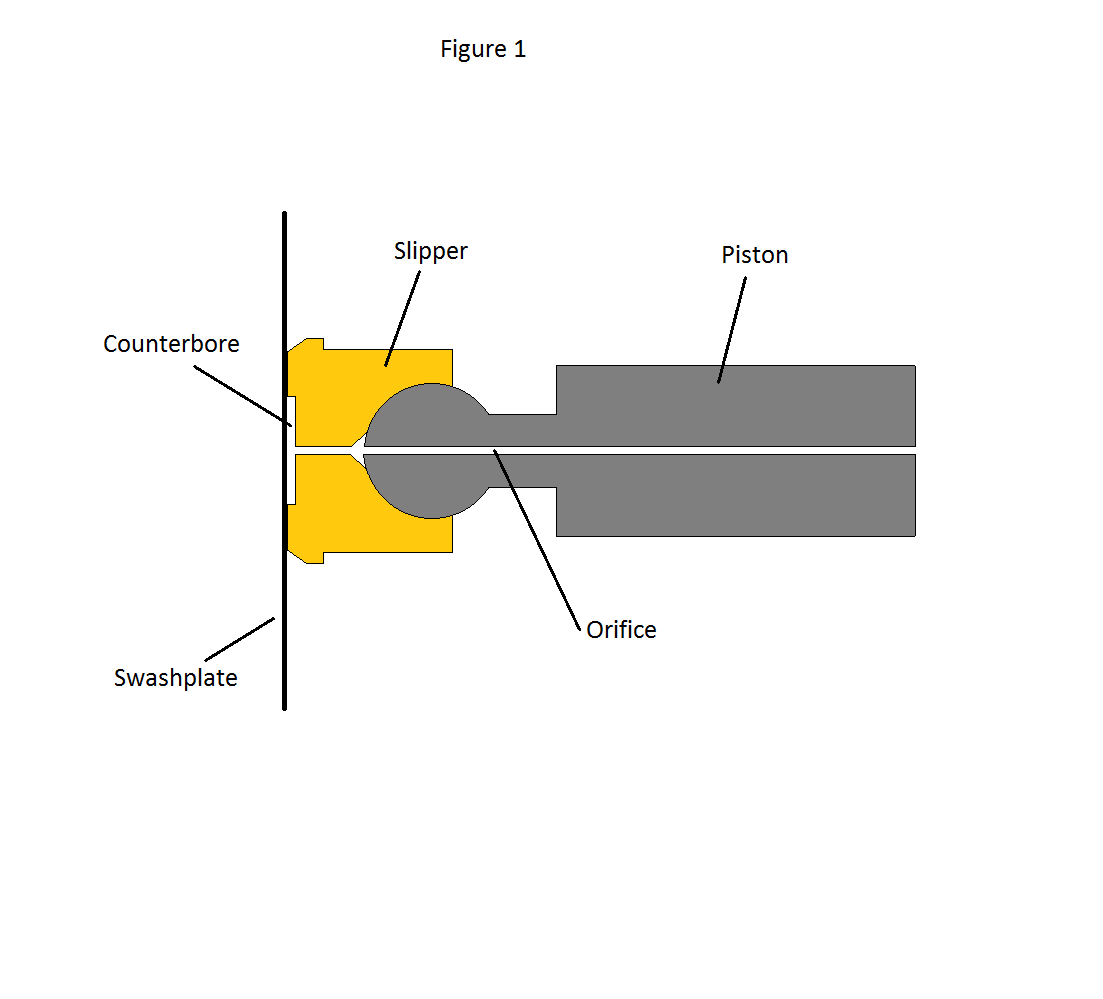
To shed some light on just how tricky lubricating a piston pump can be, for example, I’ll discuss with you the piston assembly of an axial pump (figure 1). The piston itself is pressed into the ball seat of the slipper, and the gap between the surfaces of those two components requires lubrication to enable the ball to move around freely. Drilled through the piston and the slipper is an orifice which transmits fluid under pressure from the displacement side of the piston down through to the counterbore under the slipper.
The slipper has a counterbore in the center, leaving an annular area of contact against the swashplate, of which the slipper will orbit. The counterbore in the slipper (Figure 2) provides an area of pressure to balance the force against the piston side, limiting the force bias between the slipper and swashplate. In this case, it’s a form of hydrostatic bearing, which also provides fluid for full film lubrication between the swashplate and slipper.
Without the balanced forces across the contact area of the slipper, there can be heavy scoring from contamination or mushrooming of the entire slipper surface area, especially as it spins at 3,600 rpm or above and at over 5,000 psi. Most piston pumps require a minimum pressure to operate at, say 300-500 psi, which provides energy to the control and bias pistons, but also ensures full film lubrication occurs everywhere it is needed.
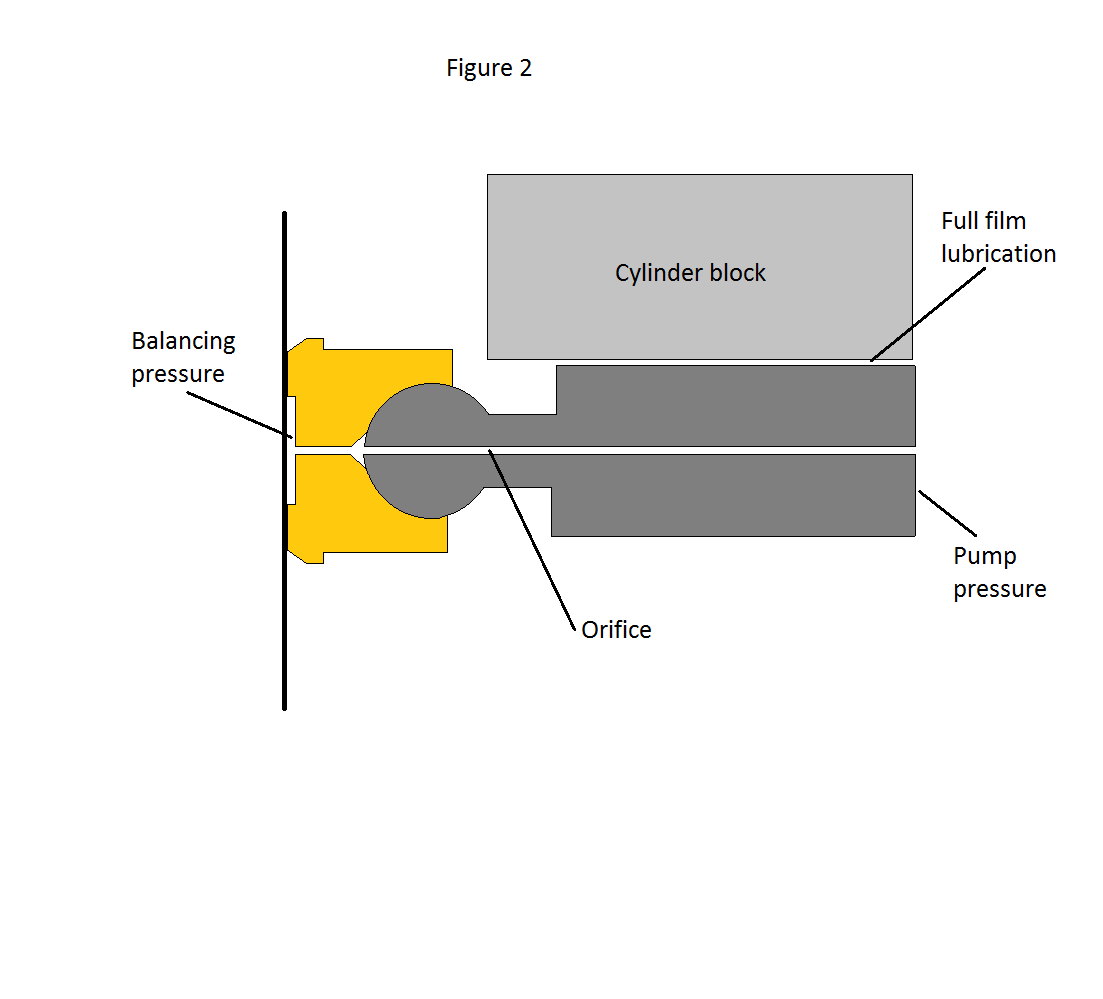
Hydraulic components can lend their inherent pressure potential to more than balanced pistons or other components, such as spools. Between the pistons and cylinder block is a precisely machined clearance to allow for perfect full film lubrication, assisted by hydraulic pressure. The pressure on the outlet side of the piston forces fluid between the piston/block clearance, which may not be normally possible under atmospheric pressure.
Lubrication and sealing
In a hydraulic system, more than just pumps require lubrication. Most hydraulic spool valves use no seals between themselves and the ports of the body, instead counting on the surface tension of the fluid itself to act as the sealing agent. The clearance between the body and spool is so tight it generally prevents excessive leakage between ports, although some leakage is natural for spool valves. Because of the tight clearances preventing free-flowing fluid between the two moving surfaces, circumferential grooves are machined in the OD of the spool, providing a cavity of sorts for the fluid to rest within. The cavity of fluid acts to lubricate the spool as it slides, preventing excessive friction.
Not exempt from requiring lubrication are hydraulic actuators. Hydraulic motors require lubrication like what is required by a pump, but linear actuators in the form of cylinders use lubrication in a whole other way. Cylinders with seals designed to limit bypass or leakage often do so at the expense of free motion; that is, the same energy used to prevent leakage also comes with a by-product of high friction.
Cylinders using a seal such as an O-ring with a backup washer are excellent for sealing, especially because they’re interference fit. However, depending on conditions, they result in high breakaway pressure and can sometimes chatter if the finish of the barrel is not ideal. To make things worse, the O-ring seal can wipe away oil, which is why it’s almost never used as a rod seal, where some residual oil provides effective lubrication.
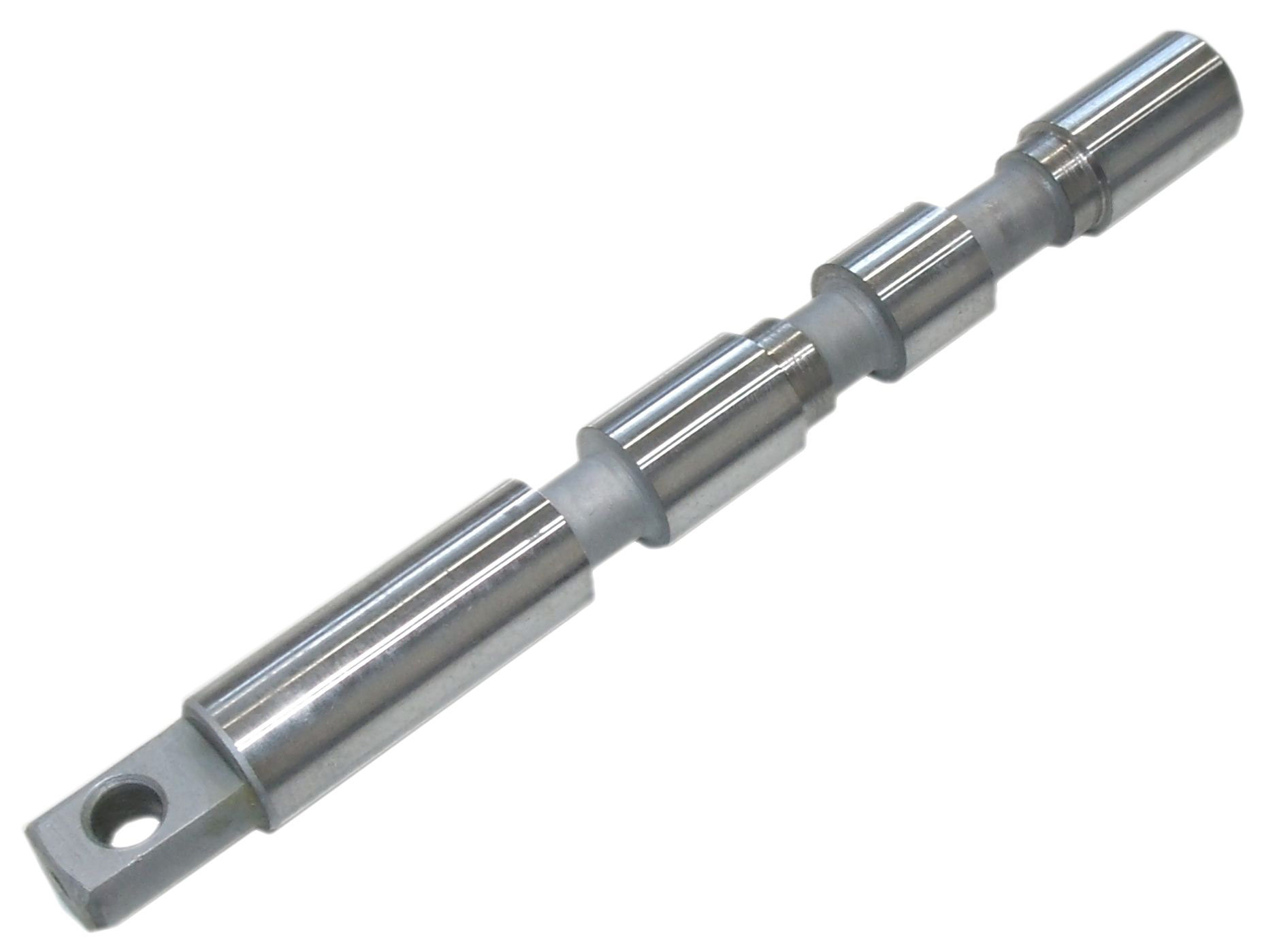
Image courtesy of Hydraulic Projects Ltd.
Lips seals are often used where low friction, high-velocity applications demand it. Energized lips seals are used to compensate for low-pressure applications, where little pressure is available to force the lips outwards toward the barrel, an effect that increases sealing. However, an energized lip seal can have the same effect as O-rings, and result in higher friction. Thinner lip seals are used when high velocity is a requirement, but these seals require higher pressure to seal as well as an interference fit seal. Because a “loose” lip seal provides more leakage, it’s better lubricated and better suited to high-speed applications, including quick acceleration.
For the highest possible velocity, no piston seals are used at all, but rather cast iron or composite guide rings only. Although sealing is inferior, the piston assembly essentially acts as a giant spool, holding fluid for lubrication and allowing the cylinder to move quickly with little friction. It should be noted that a cylinder using only guide rings is not suitable for load-holding applications, since fluid can move easily between the piston and rod side of the cylinder.
The challenges to lubricate such demanding componentry is offset by the inherent advantages of hydraulic components. Lubrication issues in hydraulics are exacerbated by the forces generated under pressure, making the lack of respect for lubrication a catastrophic mistake. Where a poorly lubricated gearbox will last a while, a poorly lubricated piston pump will destroy itself in minutes. Understanding how lubrication (or lack thereof) affects your hydraulic components is important to ensure the long life of your high-performance machine.