Low-temperature chemistry and innovative hydraulic seal designs prevent weeps and leaks.
By Ryan Webster, Hallite Seals Americas and Mark Haggerty, Hallite Seals Canada
Equipment used in industries like construction, transportation, forestry, agriculture, mining and mineral extraction requires hydraulic seals fit for extreme temperatures. Whether due to subzero outdoor conditions or cold hydraulic fluid flowing through a cylinder, the appropriate sealing system is critical for operational success.
 Original equipment manufacturers (OEMs) face an increasing demand for the highest-integrity hydraulic seals, in order to meet the needs of machines that push performance limits at low temperatures. Therefore, choosing the right seal for bitterly cold situations requires careful, thorough evaluation of some fundamental design and material aspects of the sealing solution.
Real-world examples demonstrating how certain seals perform when braving arctic-like environments should also be included in the hydraulic-seal evaluation mix. We will review several cases where equipment makers have overcome major challenges associated with finding seals designed and fit for the cold.
Design considerations
Material compatibility is a distinguishing mark of seals designed for cold environments. Some low-temperature hydraulic fluids are not compatible with common elastomers, such as NBR low-temperature, resulting in leakage. The best approach to choosing the most appropriate material begins with a sealing material that maintains pliability in low temperatures. Understanding the Glass Transition temperature (Tg) is critical. Some of the better-performing urethanes that are tailored for high-temperature performance have a Tg that is too high for many low-temperature applications. As temperatures ramp downward, the pliability of a seal is reduced along with its ability to deform and prevent leaks.
If the Tg is known, the approximate last useful temperature the seal can be relied upon to perform properly is around 15° F toward the positive. For example, material with a Tg of -60° F would have a lowest useful sealability around -45° F. This general method can help determine whether a seal is suited for use in a low-temperature environment. However, from a more-scientific, laboratory perspective, Tg is determined by using standard test methods for polymers—dynamic mechanical analysis (DMA). The DMA is used to measure and compare modulus versus temperature.
Material advances
Polyurethane is a thermoplastic elastomer capable of tremendous impact and wear resistance. Polyurethanes are unique in that they combine the strength of rigid plastics with the flexibility and elasticity of rubber. Polyurethane comes in many different chemistries, some of which are better at retaining elasticity and strength over the complete range of hardness. This particular aspect is critical when addressing an extremely cold environment. Certain polyurethane chemistries, such as PPDI (para-phenylene diisocyanate) and TODI (Tolidine diisocyanate), often have higher Tgs that prevent them from achieving robust low-temperature performance.
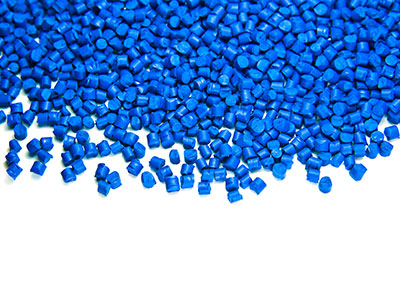
In contrast, seals produced with polyurethane materials like those found in several of Hallite’s Hythane range of performance urethanes have the lowest Tg on the market and, thus, yield much greater low-temperature performance. Hythane EU-polyether urethanes (181, 221 and 371) are unique in their ability to withstand the cold. Specifically, the polyurethane materials remain flexible as temperatures drop, and are indispensable when addressing low-temp applications.
It is also possible for assemblies made of polytetrafluoroethylene (PTFE) to be applied to more challenging applications. PTFE, the most chemical-resistant thermoplastic polymer available, offers low friction, high-speed capacity and broad temperature resistance not found in most composite materials.
Fillers such as glass, bronze, carbon, and mineral can be used to provide an even wider range of performance characteristics. When paired with appropriate elastomers and/or metal loaders, Armorlene PTFE can be used to great effect in a multitude of environments such as: extremely low temperature; high speed (up to 15 m/sec or 50 ft/sec); low friction/breakaway; high longevity and wear; broad fluid compatibility; and high-pressure capabilities up to 600 bar (8,700 psi).
Experiences from the field
When equipment is left parked in extremely cold weather, it is not uncommon to find cylinders weeping fluid at the rod gland. For proper function of a typical hydraulic system, the circuit must be sufficiently warmed to allow hydraulic fluids to flow properly. When the system is turned off it is impacted by the cold, thus seals manufactured with materials or geometries without the flexibility to provide effective sealing force will leak oil from the cylinder.
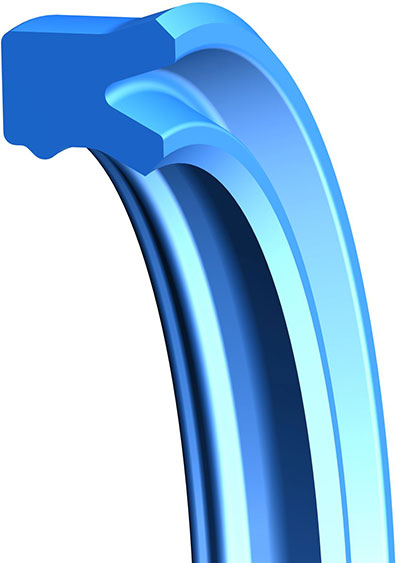
This was the case with a major excavator manufacturer in Asia. At the manufacturer’s request, the metric tooling range of the Hallite 621 high-pressure rod seal was expanded and used to replace a failing OEM seal where drips and puddles of hydraulic oil were often found under new or recently-purchased machines. The expanded rod-sealing solution addressed the manufacturer’s need for a durable product, reducing warranty claims and increasing customer satisfaction. The 621 seal is produced in more than 70 European and Asian metric sizes from 30 to 215 mm. In addition, the imperial size range includes 75 sizes from 1.25 to 15.00 in.
A global road-equipment manufacturer also used the 621 seals to address cold-weather warranty issues. Extensive cold box testing at -40° F revealed exceptional performance of the 621 seal when compared with the existing product. The test itself used cylinders filled with oil which were placed inside a cold chamber with a temperature set to -40° F. Pressure was then slowly applied to the cylinders in a manner that simulated low flow or a completely shut-down environment. The result was that the manufacturer’s current seal leaked significantly in every test. Conversely, the 621 performed leak-free throughout the entirety of the test. In the end, the engineering team replaced the incumbent seal with the 621 sealing package, which virtually eliminated the manufacturer’s seal-related warranty claims.
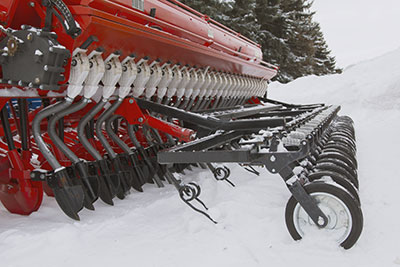
Agriculture equipment manufacturers are not immune to cold weather-related challenges. Puddles of oil under equipment stored for the winter are common. The Hallite T605 rod seal is molded in Hythane 181, and it has been applied in such cases to successfully solve leak issues. Its design features sealing lips trimmed asymmetrically to provide optimal dry sealing in light and medium-duty applications. However, the seal can be considered for use in heavy-duty applications when used with a suitable full-depth back-up ring or a reduction in the housing’s extrusion gaps.
The 605 rod seal has a secondary lip that is precisely designed to have interference in the seal housing groove. The secondary sealing lip, located behind the primary sealing lip, improves stability of the seal in the gland. The inner dynamic lip is shorter and more robust, improving sealing and reaction time when compared to conventional, symmetrical U-rings. The 605 range covers most standard housings used in Europe, North America and Asia.
It is important to note, too, that the 605 seal is often used to reduce the variability of a leak analysis. It is inserted for the sole purpose of reducing the variables that may cause a leak in a system. With its penchant for extreme sealing ability, this seal helps the user determine whether the issue is sealing related—or is caused by a bad surface finish, ovality or something more mechanical in nature.
As a case in point, many forklifts today are used in cold food storage facilities, where the machines are subject to a lifetime of extreme temperatures. These facilities are intolerant of leaks due to stringent standards regulating the production environment and, with it, the potentially grave consequences of product contamination.
A major forklift manufacturer needed help to eliminate an ongoing issue with residual oil leakage. The manufacturer was frustrated with what they described as wet rods forming drips or runs on their equipment in -10 to -20° F facilities. The OEM replaced the incumbent seal with the 605 and the issues were solved.
Tailgate lifts and other attachments to transportation trucks have their own challenges. The pumps and cylinders use low-weight oils to improve flow in the cold. Cylinders are often single-acting and require only a piston seal, bearing and wiper. Hallite designed the 659 piston seal specifically for these applications. The 659 features a secondary sealing lip and Hythane 181 material. The unique design and material combine to offer leak-free performance. The seal is available to directly interchange with common O-ring groove housings, aiding the designer when space is a challenge.
The protection offered by rod wipers should also be considered for complete cold-weather cylinder operation. Being directly exposed to the environment, the wiper must remain flexible but tough to seal out contaminants and moisture (dew and ice). There are several high-performance wiper options in the Hythane material suite, specifically the 181, 221, 591 and 371 materials. These profiles include snap-in styles such as 520, 521 and 831 all the way to the advanced Umbrella Wiper Technology found in the 820, 842, 844 and 846 profile ranges.
When addressing sealing demands for extremely cold environments, one must remember to thoroughly consider the design and materials needed for proper function. It is also vital to evaluate the seal’s current overall performance in the field. As industry requirements for more robust, dynamic sealing options for various cold conditions continue to evolve, it is crucial to follow the emergence and development of new and innovative test methods that assess seal performance—as this will play a vital role in the future.
Hallite
hallite.com