• Skip to primary navigation
  • Skip to main content
  • Skip to primary sidebar
  • Skip to footer

Sealing & Contamination Control Tips

Fluid Power Sealing and Contamination Control Information and Resources

  • News
  • Contamination Control
  • Filtration
  • Seals
  • Fluids
  • Design Guides
  • Advertise
  • Subscribe
You are here: Home / Filtration / Hydraulic fluid’s overlooked saboteur

Hydraulic fluid’s overlooked saboteur

August 10, 2023 By Rachael Pasini

Share

Water and particulate matter receive much attention for their impacts on hydraulic fluid quality. But there’s another less-famous troublemaker causing problems right under OEMs’ noses.

Just like any contaminant, air can be introduced into hydraulic fluid through various means. Common sources include leaks, loose connections, worn seals, and agitation or turbulence within the reservoir. Even regular maintenance tasks, such as changing filters or replacing oil, can inadvertently add air to the fluid.

Air contamination can cause the following problems:

  • Gaseous cavitation. As air bubbles coalesce, grow, and collapse inside a hydraulic system, it causes loud noises and can damage the internal hydraulic components.
  • Spongy hydraulics. Unlike hydraulic fluid, air is compressible. As a result, too much air contamination can cause a delayed response or “spongy” feeling in a hydraulic system instead of an instant reaction. The result is inefficient, unpredictable, and potentially dangerous system performance.
  • Oxidation of hydraulic fluid. When oxygen reacts with hydraulic fluid, it produces varnish, a sludgy byproduct. This varnish increases fluid viscosity and can build up around valves, causing sluggish performance, damage to system components, blocked return lines, and other concerns.

Between safety issues, poor performance, and costly repairs, addressing this contamination is vital for safe and efficient hydraulic operations. Schroeder Industries’ new Air Fusion Technology (AFT) is an in-tank air filtration solution engineered to increase machine reliability and efficiency, protect components, and enable downsized hydraulic reservoirs.
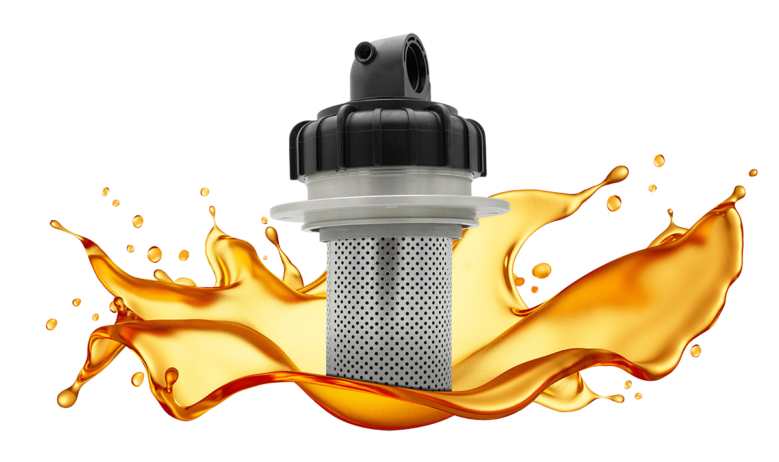
Schroeder’s new Air Fusion Technology (AFT) in-tank air filter solution is engineered to increase machine reliability and efficiency. Image courtesy of Schroeder.

Compared to a standard out-to-in flow in-tank filter, the AFT reduces the amount of air that enters the suction line on the first pass by 20%. As the AFT decreases fluid turbidity, it channels fluid upwards and promotes rapid bubble coalescence. These bubbles quickly rise to the surface of the reservoir and dissipate. Contrarily, the traditional filter is less effective at reducing turbidity, allowing air bubbles to stay suspended lower in the reservoir and enter the suction strainer.
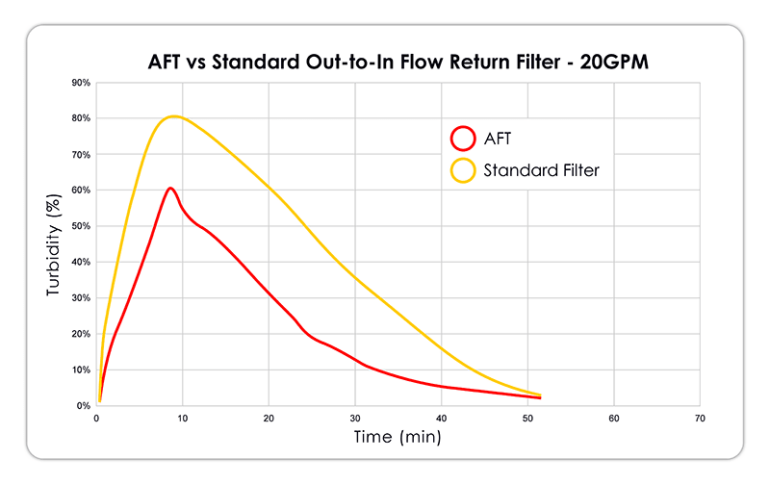
Graph showing air intake in Schroeder AFT versus a standard out-to-in filter.
When compared to a standard out-to-in flow in-tank filter, the AFT reduced the amount of air that entered the suction line on the first pass by 20%. Image courtesy of Schroeder.

“Within a hydraulic system, the only way to remove air from the hydraulic oil is to get it to rise to the surface of the fluid within the reservoir and dissipate it out the breather. Everywhere else is a pressurized closed system,” said Jeremy Crookshanks, product manager of Hydraulic & Lube Filtration at Schroeder Industries. “When we started our tank optimization program, we originally set out to use our existing filters to help gain performance and reduce the size of hydraulic reservoirs. But through CFD modeling and other analyses, we found ways to tweak the filter and came up with the next generation of filter families.”

The AFT’s unique filter head is 100% injection molded and swivels independently of the inlet port, allowing toolless element change-outs. A specialized bypass valve in the head of the filter allows the filter to de-aerate fluid even when in bypass for greater filtration efficiency.
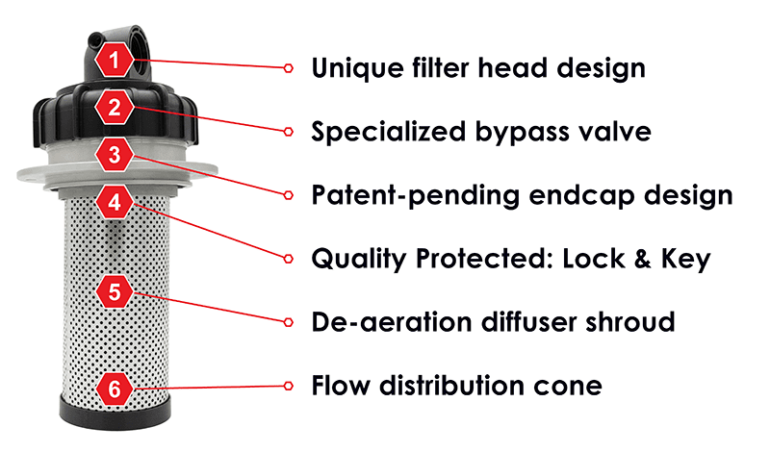
Schroeder's Air Fusion Technology Filter with its design features labeled.
The AFT filter includes windows and a bypass valve located at the top of the element to de-aerate the fluid and keep contaminants within the element during bypass. Image courtesy of Schroeder.

“A lot of other filters have a bypass valve in the bottom of the element, and all the dirt and contaminants come to rest on that bypass dish. Then, in a cold-start scenario when the oil is heavy and more viscous, all the contaminants flush right into the tank,” said Crookshanks. “The filter’s supposed to clean things up, not let stuff back down into the reservoir. So, we moved the bypass up into the head of the filter, and the contaminant stays down in the element itself.”

The patented endcap design allows bypass flow to enter the top of the element while still being subjected to the diffuser shroud to maximize filtration. Additionally, the patented Lock & Key Quality Protection element design ensures that only high-quality elements are used to ensure that the AFT performs at its full potential.

“The nice thing about Lock & Key is, just like making unique keys for a house, we can do special locks and keys for different customers. And if we do that, then it moves from quality protection or a patented solution to intellectual property. So, maybe an OEM owns that, and only that OEM can use those elements,” said Crookshanks.

Other notable design features include the de-aeration diffuser shroud that significantly reduces fluid turbidity. Less turbulent fluid allows for faster bubble coalescence and improved air filtration. Also, the internal flow distribution cone redirects fluid toward the top of the reservoir, allowing air to exit the hydraulic fluid more easily.

“If you think about air bubbles, the smaller the air bubble, the slower it moves through the hydraulic fluid,” said Crookshanks. “So, if you use the shroud to coalesce small air bubbles up into larger air bubbles, they’ll rise faster to the surface — just general buoyancy.”

The filter design also includes windows at the top of the element so that even in bypass mode, fluid flow is still pushed down into the coalescing area to help de-aerate the fluid.
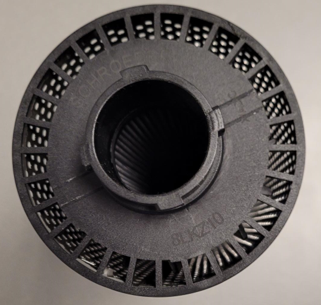
Top view of the windows on Schroeder's Air Filter Technology (AFT).
Windows at the top of the new filter element help de-aerate the fluid even when in bypass. Image courtesy of Schroeder.

“At Schroeder, we can inject air into a customer’s hydraulic tank and monitor how quickly that air dissipates out of the reservoir. And we can test the hydraulic tank design versus our optimized design,” said Crookshanks. “We also have an air content sensor that we take to the field and hook up on a machine to check the air content. Then, we can either change to a filter like the AFT to see if that cleans up the issue. If it doesn’t, we can work together on a CFD simulation of the reservoir to see what changes we could make to improve the overall tank performance.”
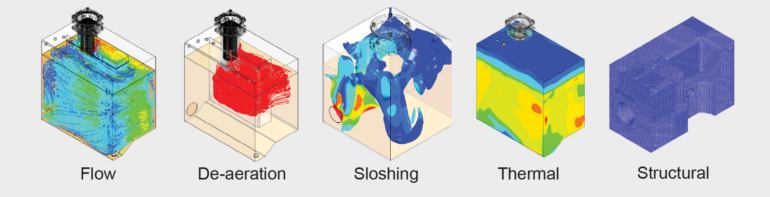
CFD images of hydraulic tanks showing fluid and air flow.
Schroeder uses CFD modeling and laboratory testing to improve filter and tank design and optimize space and performance. Image courtesy of Schroeder.

Energy efficiency is a major component of Schroeder’s Energy Sustainability Initiative. With the AFT, the goal is to create a smaller, more efficient hydraulic system to help OEMs get the most out of their fuel sources, whether diesel, hydrogen, or electricity.

“One of our goals is to reduce the size of the reservoir because less oil and less steel is less cost on the machine and less environmental and carbon footprint,” said Crookshanks.

The AFT is so effective and efficient in its filtration capabilities that it can downsize a machine’s hydraulic reservoir by up to 60%. A smaller reservoir results in a lighter system, which can improve energy efficiency. With less room taken up by the hydraulic tank, space becomes available for a larger fuel tank, additional batteries, or other useful components.

Schroeder Industries
schroederindustries.com

You might also like

Filed Under: Filtration, News, Products Tagged With: schroeder, schroederindustries

Primary Sidebar

Fluid Power World Digital Editions

Fluid Power World Digital Edition

Browse the most current issue of Fluid Power World and back issues in an easy to use high quality format. Bookmark, share and interact with the leading design engineering magazine today.

Fluid Power Design Guides

fluid
“sact
EXPAND YOUR KNOWLEDGE AND STAY CONNECTED
Get the latest info on technologies, tools and strategies for Fluid Power Professionals.

Meta

  • Log in
  • Entries feed
  • Comments feed
  • WordPress.org

Archives

  • August 2026
  • July 2026
  • June 2026
  • May 2026
  • April 2026
  • March 2026
  • February 2026
  • January 2026
  • November 2025
  • October 2025
  • September 2025
  • August 2025
  • July 2025
  • June 2025
  • May 2025
  • April 2025
  • March 2025
  • February 2025
  • January 2025
  • December 2024
  • November 2024
  • October 2024
  • September 2024
  • August 2024
  • July 2024
  • June 2024
  • May 2024
  • April 2024
  • March 2024
  • February 2024
  • January 2024
  • December 2023
  • November 2023
  • October 2023
  • September 2023
  • August 2023
  • July 2023
  • June 2023
  • May 2023
  • April 2023
  • March 2023
  • February 2023
  • January 2023
  • December 2022
  • November 2022
  • October 2022
  • September 2022
  • August 2022
  • July 2022
  • June 2022
  • May 2022
  • April 2022
  • March 2022
  • February 2022
  • January 2022
  • December 2021
  • November 2021
  • October 2021
  • September 2021
  • August 2021
  • July 2021
  • June 2021
  • May 2021
  • April 2021
  • March 2021
  • February 2021
  • January 2021
  • December 2020
  • November 2020
  • October 2020
  • September 2020
  • August 2020
  • July 2020
  • June 2020
  • May 2020
  • April 2020
  • March 2020
  • February 2020
  • January 2020
  • December 2019
  • November 2019
  • October 2019
  • September 2019
  • August 2019
  • July 2019
  • June 2019
  • May 2019
  • April 2019
  • March 2019
  • February 2019
  • January 2019
  • December 2018
  • November 2018
  • October 2018
  • September 2018
  • August 2018
  • July 2018
  • June 2018
  • May 2018
  • April 2018
  • March 2018
  • February 2018
  • January 2018
  • December 2017
  • November 2017
  • October 2017
  • September 2017
  • August 2017
  • July 2017
  • June 2017
  • May 2017
  • April 2017
  • March 2017
  • February 2017
  • January 2017
  • December 2016
  • November 2016
  • October 2016
  • September 2016
  • August 2016
  • July 2016
  • June 2016
  • May 2016
  • April 2016
  • March 2016
  • February 2016
  • January 2016
  • December 2015
  • November 2015
  • September 2015
  • August 2015
  • July 2015
  • June 2015

Recent Comments

  • Are clogged hydraulic filters better? | Sealing & Contamination Control Tips on What types of hydraulic filters are available?

Categories

  • Blogs
  • Contamination Control
  • Featured
  • Filtration
  • Fluids
  • Mobile Hydraulic Tips
  • News
  • Products
  • Seals
  • tanks and reservois
  • Testing Equipment
  • Uncategorized

Recent Comments

  • Are clogged hydraulic filters better? | Sealing & Contamination Control Tips on What types of hydraulic filters are available?

Archives

  • August 2026
  • July 2026
  • June 2026
  • May 2026
  • April 2026
  • March 2026
  • February 2026
  • January 2026
  • November 2025
  • October 2025
  • September 2025
  • August 2025
  • July 2025
  • June 2025
  • May 2025
  • April 2025
  • March 2025
  • February 2025
  • January 2025
  • December 2024
  • November 2024
  • October 2024
  • September 2024
  • August 2024
  • July 2024
  • June 2024
  • May 2024
  • April 2024
  • March 2024
  • February 2024
  • January 2024
  • December 2023
  • November 2023
  • October 2023
  • September 2023
  • August 2023
  • July 2023
  • June 2023
  • May 2023
  • April 2023
  • March 2023
  • February 2023
  • January 2023
  • December 2022
  • November 2022
  • October 2022
  • September 2022
  • August 2022
  • July 2022
  • June 2022
  • May 2022
  • April 2022
  • March 2022
  • February 2022
  • January 2022
  • December 2021
  • November 2021
  • October 2021
  • September 2021
  • August 2021
  • July 2021
  • June 2021
  • May 2021
  • April 2021
  • March 2021
  • February 2021
  • January 2021
  • December 2020
  • November 2020
  • October 2020
  • September 2020
  • August 2020
  • July 2020
  • June 2020
  • May 2020
  • April 2020
  • March 2020
  • February 2020
  • January 2020
  • December 2019
  • November 2019
  • October 2019
  • September 2019
  • August 2019
  • July 2019
  • June 2019
  • May 2019
  • April 2019
  • March 2019
  • February 2019
  • January 2019
  • December 2018
  • November 2018
  • October 2018
  • September 2018
  • August 2018
  • July 2018
  • June 2018
  • May 2018
  • April 2018
  • March 2018
  • February 2018
  • January 2018
  • December 2017
  • November 2017
  • October 2017
  • September 2017
  • August 2017
  • July 2017
  • June 2017
  • May 2017
  • April 2017
  • March 2017
  • February 2017
  • January 2017
  • December 2016
  • November 2016
  • October 2016
  • September 2016
  • August 2016
  • July 2016
  • June 2016
  • May 2016
  • April 2016
  • March 2016
  • February 2016
  • January 2016
  • December 2015
  • November 2015
  • September 2015
  • August 2015
  • July 2015
  • June 2015

Categories

  • Blogs
  • Contamination Control
  • Featured
  • Filtration
  • Fluids
  • Mobile Hydraulic Tips
  • News
  • Products
  • Seals
  • tanks and reservois
  • Testing Equipment
  • Uncategorized

Meta

  • Log in
  • Entries feed
  • Comments feed
  • WordPress.org

Footer

Sealing and Contamination Tips

Fluid Power World Digital Network

  • Fluid Power World
  • Mobile Hydraulic Tips
  • Pneumatic Tips
  • Hose Assembly Tips
  • Leadership in Engineering

Sealing & Contamination Control

  • Subscribe to Fluid Power World
  • Videos
  • Advertise with us
  • About us

Copyright © 2026 · Arrowfly, LLC · Privacy Policy