• Skip to primary navigation
  • Skip to main content
  • Skip to primary sidebar
  • Skip to footer

Sealing & Contamination Control Tips

Fluid Power Sealing and Contamination Control Information and Resources

  • News
  • Contamination Control
  • Filtration
  • Seals
  • Fluids
  • Design Guides
  • Advertise
  • Subscribe
You are here: Home / Seals / Effects of aging on elastomer seals

Effects of aging on elastomer seals

February 26, 2021 By Mary Gannon

Share

Contributed by Danny Nghieu, EIT, Colonial Seal

Elastomers are widely used due to their relatively high strength, low abrasion rate, and resistance to water, oils, and other chemicals. The mechanical properties of elastomers, namely their tensile strength and hardness, can change over time when the product is sitting in storage. The storage environment will typically dictate the shelf life of a rubber product. Most rubbers are sensitive to temperature, light, oxygen, moisture, heat, and mechanical load during storage. These factors can prematurely age a rubber product, thus negatively affecting its service life either as a raw material or as a finished product.
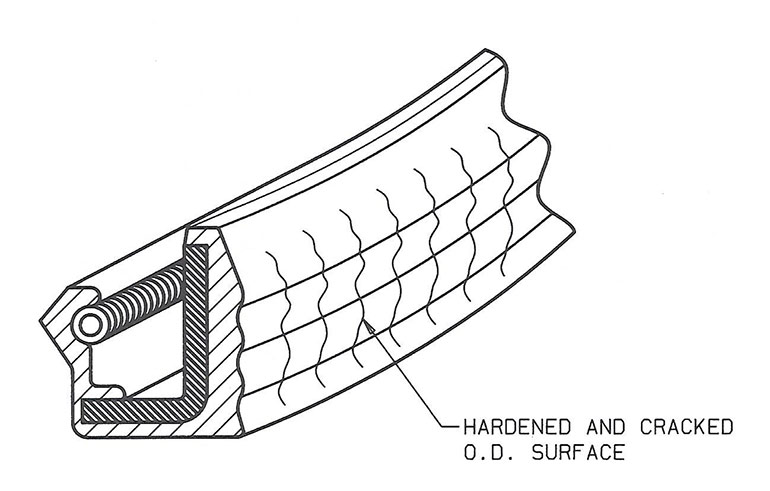
Hardened and cracked elastomer seal. Image courtesy of Colonial Seal

When elastomeric products such as seals are stored for an extended period, they become aged. Naturally, the elastomer will undergo a series of changes that will alter its material properties over time. The molecular chains that make up the elastomer will degrade, a process that starts the day that the material is manufactured. In this article, we will explore how elastomers commonly used in seals can change over time from aging and the effect it has on seal performance. We will also present guidelines on best practices for handling and storing elastomeric products to ensure optimal service life.

Elastomers are natural or synthetic polymers that have elastic properties. The molecular chains that make up elastomers are held together by weak intermolecular forces. Generally, they have low Young’s modulus and high yield strength. They also have the unique property of regaining their original shape and size after being stretched or compressed. Many different types of elastomers can be found in seals such as natural butadiene rubber (NBR), Viton (FKM), silicone rubber (VMQ), or polyurethane (PU).
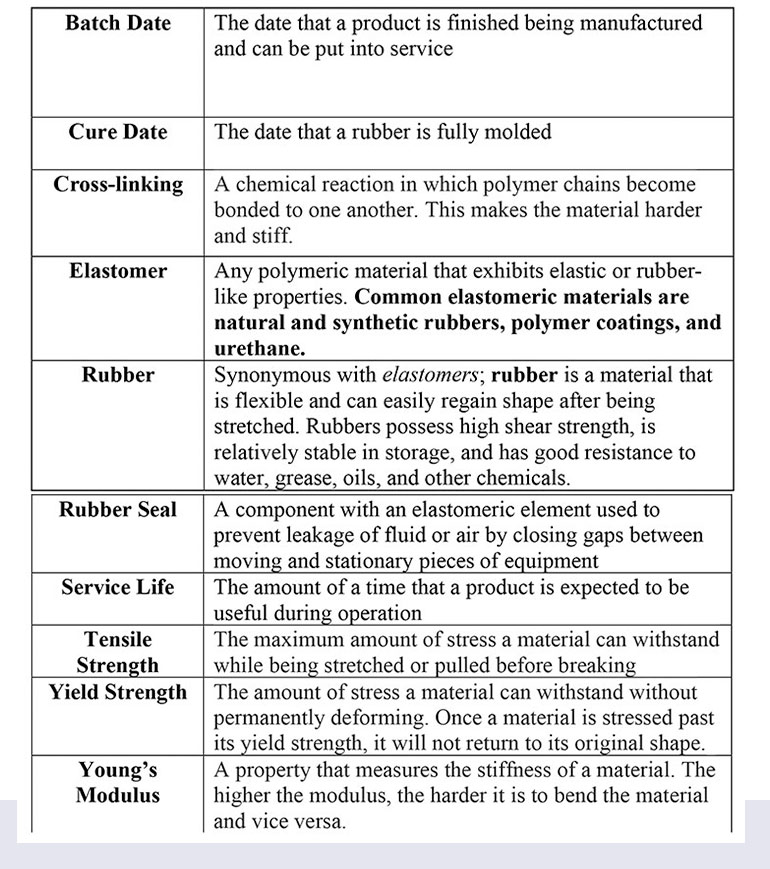
Table 1. Definitions of selected terms

Accelerated aging tests are typically conducted to get a better understanding of how elastomers degrade over time. We will focus on the most common form of elastomer aging observed in industrial applications: thermal aging.

Thermal aging tests are performed to check the ability of a product to withstand elevated temperatures. The tests are typically conducted by placing elastomeric samples inside of a hot air oven. The samples are hung on a turntable inside the oven and rotated slowly to heat evenly and can spend days or weeks in the oven at a high temperature (100 °C+). Physical properties of the samples, such as shore hardness and tensile strength, are then measured and analyzed.
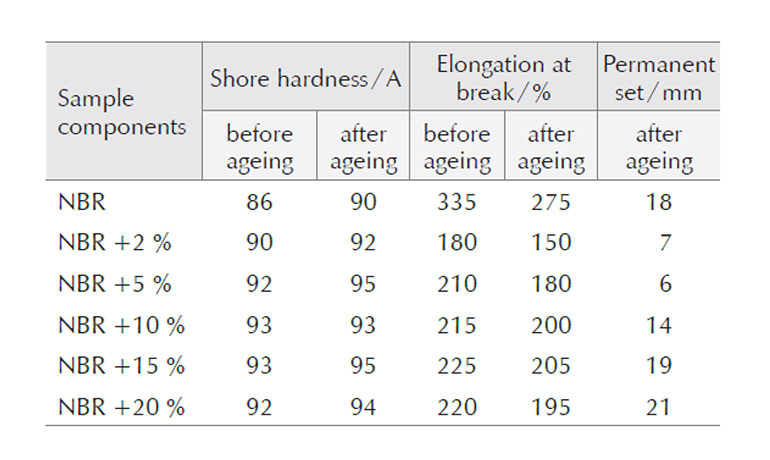
3 Table 2. Properties of NBR and Graphite filled NBR (GE-NBR) before and after a thermal aging test. The specimens were aged in an air-circulating oven for seven days. The hardness increases and the material breaks at a lower elongation point (Source: Li, Fei-Zhou, et al).

Two primary chemical reactions occur when rubber ages: hardening and softening. Hardening occurs when the polymer chains that make up a rubber start to bind together. Most elastomers found in seals (NBR, FKM, VMQ, EPDM, POM, etc.) will harden with age due to cross-linking (See Table 2). The tensile strength of the material will also decrease, which results in the elastomer becoming brittle (See Figure 1 and 2). Some materials, such as natural rubber or isoprene polymers, can soften with age due to weakening in their molecular chain, but these materials are not often used in sealing applications.


Applications and Testing
Elastomer seals are vital components in most industrial machines. They keep lubrication in and contaminants out. To be effective, the seal should have a proper lip construction and the material should be free of defects. What would happen if you put an aged oil seal into service? Lip materials are typically soft so that they may easily stretch and move into surface imperfections and seal on rough surfaces. If the material ages and becomes hardened, it will reduce friction on the system but may lose its sealing ability. Additionally, because of the strength decrease, it will also be more susceptible to damage and will likely have a shorter service life.
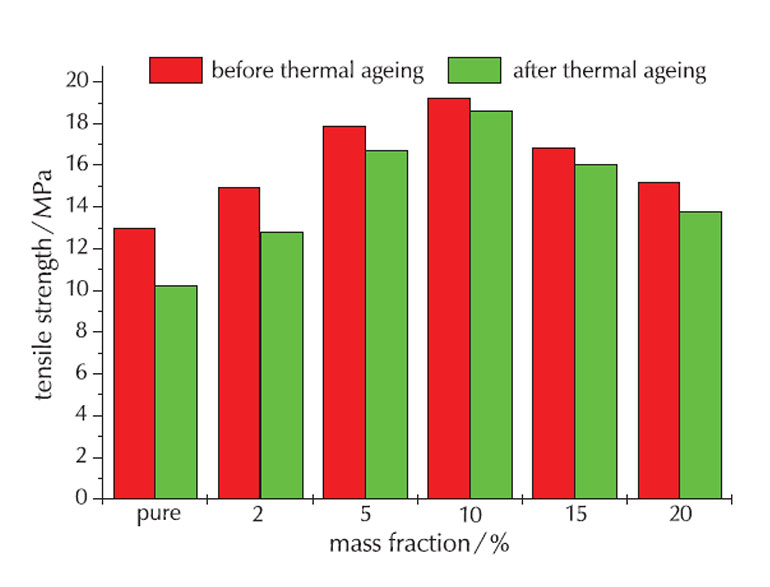
Figure 1. Tensile strength of NBR and GE-NBR pre and post age testing. The tensile strength of both materials decrease (Source: Li, Fei-Zhou, et al).

Here at Colonial Seal Company, we have conducted our own independent study on the effects of aging on rubber seals (See Figure 3). Two standard “A” style NBR oil seals were tested on an endurance testing machine. Both seals were stored in a climate-controlled warehouse and kept in original packaging until testing. The test was conducted at 2,000 rpm, 200°F, and kept at a constant 7 psi. Testing ran for 24 hours per day until leakage was observed. An approximate 13% of reduction in useful life was observed in a 6-year-old seal compared to a newly manufactured seal.
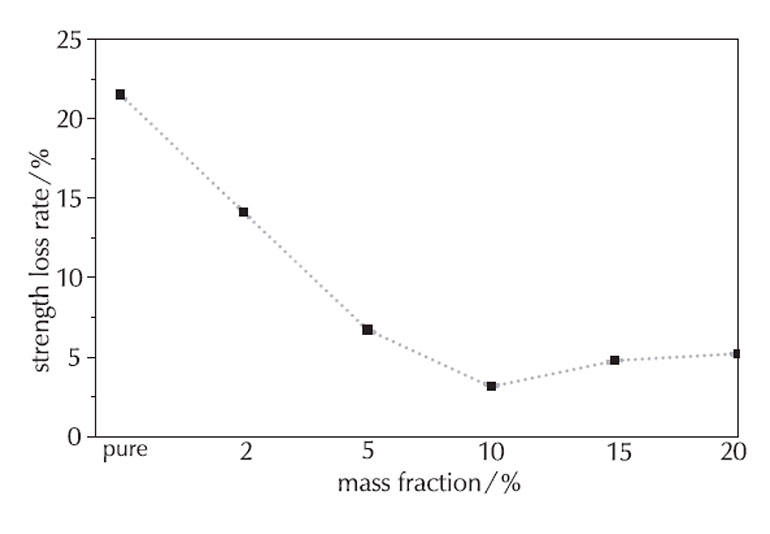
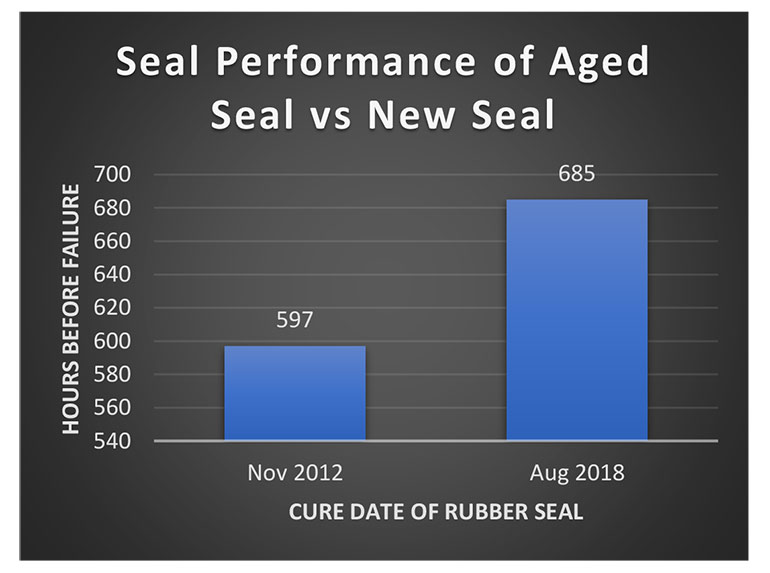
Figure 2. Strength loss percentage of NBR and GE-NBR after age testing. Pure NBR experiences the most strength loss, while GE-NBR experiences less % loss with varying mass fractions of graphite (Source: Li, Fei-Zhou, et al).


Figure 3. Independent seal testing data from Colonial Seal, dated January 2019.

Storage
Elastomers typically degrade at a slower pace if they are properly stored. SAE AS5316 Standard, DIN 7716 and ISO 2230 standards offer best practices for storing elastomer seals. These standards offer the same general guidelines for storage conditions. Ideal storage conditions are as follows:
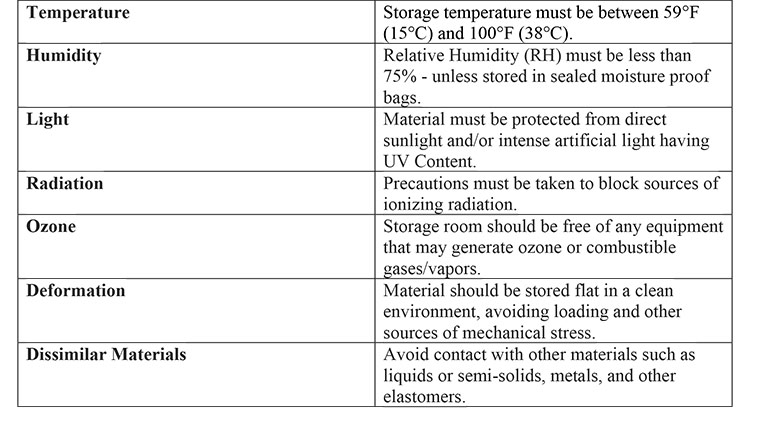
Colonial Seal ideal-storage-conditions

North American SAE AS5316 recommends a maximum shelf life of:
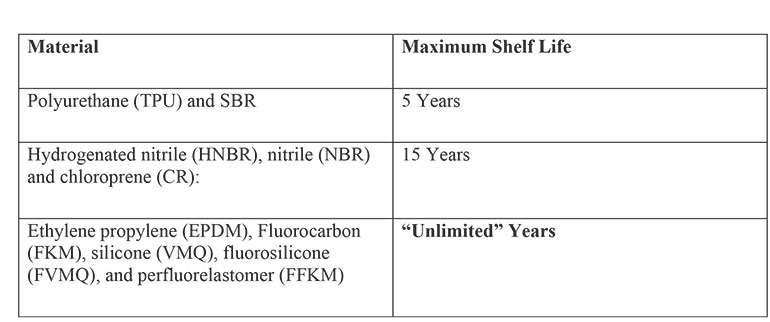
Colonial Seal SAE-shelf-life

German DIN 7716 and International ISO 2230 standards are somewhat stricter compared to AS5316. Recommended maximum shelf life per ISO and DIN standards is as follows:
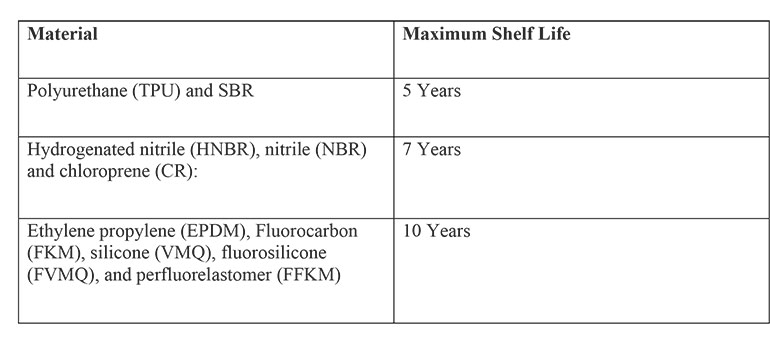
Colonial Seal German-and-DIN-storage

Regardless of which standard is observed, elastomer seals should always be inspected prior to installation. A visual inspection is sufficient to identify dirt, deformations, cracks, tears, discoloration, hardening or softening. Elastomer seals that are in storage should be checked annually. Any products with obvious defects should be disposed of properly.

Summary

An inventory check should always note the inventory age of an elastomeric product. Following an inventory check and inspection, the recommended storage period may be extended. Smaller elastomer seals or seals stored in non-ideal conditions should be inspected more often, perhaps on a semi-annual or quarterly basis. Lastly, FIFO (first in, first out) procedures are recommended to push out old stock and reduce obsolete inventory. This also ensures that when the seals are put into service, they will have an optimal service life.

Colonial Seal
colonialseal.com


References

Chandrasekaran, V. C. (2010). Rubber Properties for Functional Seal Requirements. Rubber Seals for Fluid and Hydraulic Systems, 7–22. doi:10.1016/b978-0-8155-2075-7.10002-4

Korane, Ken. “Storage and Cleaning of Elastomer Seals.” Fluid Power World, 18 July 2018,

Li, Fei-Zhou, et al. “Investigation of Ageing Behaviour of Nitrile-Butadiene Rubber with Added Graphene in an Accelerated Thermal Ageing Environment.” Kemija u Industriji, edited by Nenad Bolf, no. 1–2, Croatian Society of Chemical Engineers/HDKI, Jan. 2018, pp. 29–37. Crossref, doi:10.15255/kui.2017.042.

  1. Heller, J. Legare, S. Wang and S. Fukuhara, “Thermal stability and sealing performance of perfluoroelastomer seals as a function of crosslinking chemistry,” J. Vacuum Society & Technology A, vol. 17, pp. 2199-2124, 1999.

Y.S. Duh, T.C. Ho, J.R. Chen, and C.S. Kao, Polymers 2, 174-187 (2010)

You might also like

Filed Under: Featured, Seals Tagged With: colonialseal

Primary Sidebar

Fluid Power World Digital Editions

Fluid Power World Digital Edition

Browse the most current issue of Fluid Power World and back issues in an easy to use high quality format. Bookmark, share and interact with the leading design engineering magazine today.

Fluid Power Design Guides

fluid
“sact
EXPAND YOUR KNOWLEDGE AND STAY CONNECTED
Get the latest info on technologies, tools and strategies for Fluid Power Professionals.

Meta

  • Log in
  • Entries feed
  • Comments feed
  • WordPress.org

Archives

  • October 2026
  • August 2026
  • July 2026
  • June 2026
  • May 2026
  • April 2026
  • March 2026
  • February 2026
  • January 2026
  • November 2025
  • October 2025
  • September 2025
  • August 2025
  • July 2025
  • June 2025
  • May 2025
  • April 2025
  • March 2025
  • February 2025
  • January 2025
  • December 2024
  • November 2024
  • October 2024
  • September 2024
  • August 2024
  • July 2024
  • June 2024
  • May 2024
  • April 2024
  • March 2024
  • February 2024
  • January 2024
  • December 2023
  • November 2023
  • October 2023
  • September 2023
  • August 2023
  • July 2023
  • June 2023
  • May 2023
  • April 2023
  • March 2023
  • February 2023
  • January 2023
  • December 2022
  • November 2022
  • October 2022
  • September 2022
  • August 2022
  • July 2022
  • June 2022
  • May 2022
  • April 2022
  • March 2022
  • February 2022
  • January 2022
  • December 2021
  • November 2021
  • October 2021
  • September 2021
  • August 2021
  • July 2021
  • June 2021
  • May 2021
  • April 2021
  • March 2021
  • February 2021
  • January 2021
  • December 2020
  • November 2020
  • October 2020
  • September 2020
  • August 2020
  • July 2020
  • June 2020
  • May 2020
  • April 2020
  • March 2020
  • February 2020
  • January 2020
  • December 2019
  • November 2019
  • October 2019
  • September 2019
  • August 2019
  • July 2019
  • June 2019
  • May 2019
  • April 2019
  • March 2019
  • February 2019
  • January 2019
  • December 2018
  • November 2018
  • October 2018
  • September 2018
  • August 2018
  • July 2018
  • June 2018
  • May 2018
  • April 2018
  • March 2018
  • February 2018
  • January 2018
  • December 2017
  • November 2017
  • October 2017
  • September 2017
  • August 2017
  • July 2017
  • June 2017
  • May 2017
  • April 2017
  • March 2017
  • February 2017
  • January 2017
  • December 2016
  • November 2016
  • October 2016
  • September 2016
  • August 2016
  • July 2016
  • June 2016
  • May 2016
  • April 2016
  • March 2016
  • February 2016
  • January 2016
  • December 2015
  • November 2015
  • September 2015
  • August 2015
  • July 2015
  • June 2015

Recent Comments

  • Are clogged hydraulic filters better? | Sealing & Contamination Control Tips on What types of hydraulic filters are available?

Categories

  • Blogs
  • Contamination Control
  • Featured
  • Filtration
  • Fluids
  • Mobile Hydraulic Tips
  • News
  • Products
  • Seals
  • tanks and reservois
  • Testing Equipment
  • Uncategorized

Recent Comments

  • Are clogged hydraulic filters better? | Sealing & Contamination Control Tips on What types of hydraulic filters are available?

Archives

  • October 2026
  • August 2026
  • July 2026
  • June 2026
  • May 2026
  • April 2026
  • March 2026
  • February 2026
  • January 2026
  • November 2025
  • October 2025
  • September 2025
  • August 2025
  • July 2025
  • June 2025
  • May 2025
  • April 2025
  • March 2025
  • February 2025
  • January 2025
  • December 2024
  • November 2024
  • October 2024
  • September 2024
  • August 2024
  • July 2024
  • June 2024
  • May 2024
  • April 2024
  • March 2024
  • February 2024
  • January 2024
  • December 2023
  • November 2023
  • October 2023
  • September 2023
  • August 2023
  • July 2023
  • June 2023
  • May 2023
  • April 2023
  • March 2023
  • February 2023
  • January 2023
  • December 2022
  • November 2022
  • October 2022
  • September 2022
  • August 2022
  • July 2022
  • June 2022
  • May 2022
  • April 2022
  • March 2022
  • February 2022
  • January 2022
  • December 2021
  • November 2021
  • October 2021
  • September 2021
  • August 2021
  • July 2021
  • June 2021
  • May 2021
  • April 2021
  • March 2021
  • February 2021
  • January 2021
  • December 2020
  • November 2020
  • October 2020
  • September 2020
  • August 2020
  • July 2020
  • June 2020
  • May 2020
  • April 2020
  • March 2020
  • February 2020
  • January 2020
  • December 2019
  • November 2019
  • October 2019
  • September 2019
  • August 2019
  • July 2019
  • June 2019
  • May 2019
  • April 2019
  • March 2019
  • February 2019
  • January 2019
  • December 2018
  • November 2018
  • October 2018
  • September 2018
  • August 2018
  • July 2018
  • June 2018
  • May 2018
  • April 2018
  • March 2018
  • February 2018
  • January 2018
  • December 2017
  • November 2017
  • October 2017
  • September 2017
  • August 2017
  • July 2017
  • June 2017
  • May 2017
  • April 2017
  • March 2017
  • February 2017
  • January 2017
  • December 2016
  • November 2016
  • October 2016
  • September 2016
  • August 2016
  • July 2016
  • June 2016
  • May 2016
  • April 2016
  • March 2016
  • February 2016
  • January 2016
  • December 2015
  • November 2015
  • September 2015
  • August 2015
  • July 2015
  • June 2015

Categories

  • Blogs
  • Contamination Control
  • Featured
  • Filtration
  • Fluids
  • Mobile Hydraulic Tips
  • News
  • Products
  • Seals
  • tanks and reservois
  • Testing Equipment
  • Uncategorized

Meta

  • Log in
  • Entries feed
  • Comments feed
  • WordPress.org

Footer

Sealing and Contamination Tips

Fluid Power World Digital Network

  • Fluid Power World
  • Mobile Hydraulic Tips
  • Pneumatic Tips
  • Hose Assembly Tips
  • Leadership in Engineering

Sealing & Contamination Control

  • Subscribe to Fluid Power World
  • Videos
  • Advertise with us
  • About us

Copyright © 2026 · Arrowfly, LLC · Privacy Policy