Demand for higher efficiency, enhanced output and tolerance of tough terrains make it increasingly more difficult to ensure machines perform at their peak. High-performance hydraulics may be built for these conditions; however, good fluid-handling practices can keep equipment running better, longer.
Particulate and moisture contamination of hydraulic fluid causes damage to the lubricant and direct wear to machinery. The most critical ingression points of a hydraulic system are located at the vent and the cylinder, which can be remedied by adding a high-quality breather to manage the headspace and a cylinder boot to protect the piston rod. These modifications keep contaminants out of the system while in operation, however, their function is wasted if the lubricant inside the reservoir is not clean.
Hydraulic systems need tight clearances, especially in the pump and valves, requiring the hydraulic fluid to be considerably cleaner than lubricants 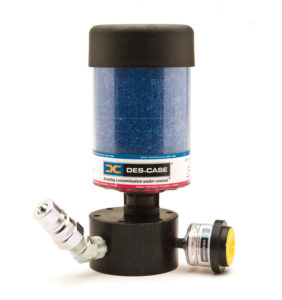 used in other equipment. To ensure that the lubricant entering the reservoir is clean and dry, equipment can be modified for maximum system integrity. One simple solution, the hydraulic adapter kit, incorporates quick-connect fittings, sample port, vacuum indicator and a desiccant breather to replace the standard breather cap and functions as the connection between your application and the filtration system. The desiccant breather on the adapter kit prevents ingression through the vent while the system is in
 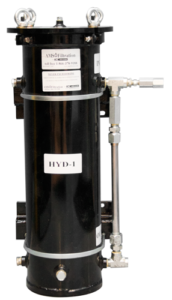 operation or while filling or emptying the reservoir. Additionally outfitting the hydraulic reservoir with a mobile equipment hydraulic kit, provides dedicated depth filtration for constant contamination control of the oil.
Modifying equipment with quality fluid handlingsystems and breathers is a small investment in the short term and will prolong lubricant life, increase uptime and reduce costly equipment repairs. To learn more about how to modify your hydraulic equipment to protect lubricant and keep equipment running at peak performance, contact Des-Case Corporation at 615-672-8800 or www.descase.com/contact.