• Skip to primary navigation
  • Skip to main content
  • Skip to primary sidebar
  • Skip to footer

Sealing & Contamination Control Tips

Fluid Power Sealing and Contamination Control Information and Resources

  • News
  • Contamination Control
  • Filtration
  • Seals
  • Fluids
  • Design Guides
  • Advertise
  • Subscribe
You are here: Home / Filtration / How does a coalescing filter work?

How does a coalescing filter work?

September 1, 2016 By Ken Korane Leave a Comment

Share
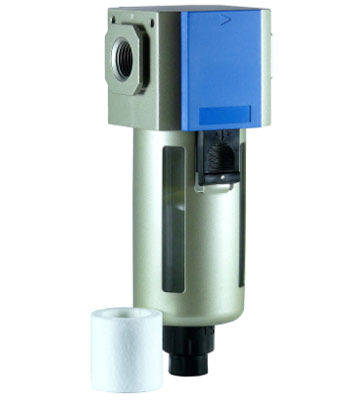
 Coalescing filter Bimba-MFD MGFB
Coalescing filter from MFD Pneumatics, a wholly owned subsidiary of Bimba

Large contaminants in a pneumatic system are readily captured by general-purpose filters or tend to settle out of a compressed-air stream. Air dryers can effectively remove water from compressed air. But aerosols—extremely small (≥ 0.1 micron) solid particles and liquid droplets of oil and water suspended in the air—remain in the flow stream and can cause problems downstream. This is where a coalescing filter come into play.

For example, these contaminants can hurt the performance of close-tolerance valves and instruments, damage seals, erode hose inner tubes and foul desiccant dryers. And they can adversely affect processes like paint spraying and contaminate end products such as food, beverages and pharmaceuticals.

Standard particulate filters do not remove most submicron contaminants. Coalescing filters, on the other hand, are designed to trap and subsequently remove submicron-size liquid oil and water and solid-particulate contamination from compressed air.

Coalescing filter elements have extremely fine fiber meshes that intercept and capture aerosol particles. They amalgamate smaller particles into larger ones. Tiny liquid droplets are brought together into larger droplets as air flows through the element’s fiber matrix, and they eventually become large enough to be drained away.

Coalescing filter elements remove contaminants using three different mechanisms:

Diffusion typically applies to particles 0.1 micron and smaller. These are subject to random Brownian motion and they collide with and are trapped by the filter. Solids adhere to the filter membranes and liquids join with other droplets to form larger masses.

Interception affects particles about 0.1 to 1 micron in size. Turbulent flow forces particles against the fibers, and they are captured in the filter matrix. Smaller pore size increases capture efficiency.

Direct impact applies to particles 1 micron and larger. Here, contaminants simply collide with and are trapped by the fibers.
In a typical coalescing filter, air enters the housing and flows through the media from the inside to the outside of the filter element. Coalesced oil and water droplets collect on the filter fibers and, as they grow in size, migrate downward due to gravity. The liquids collect in a bowl at the base of the housing and are subsequently drained away, while clean air exits the housing through the outlet port.

Coalescing filters also remove solid contaminants such as dirt, dust and rust from compressed-air systems. These particles are permanently trapped in the filter element, eventually restricting flow and blocking the filter media. So the volume, efficiency and degree of contamination of the incoming air help determine the useful life of the filter element.

In addition to common selection parameters like pressure limits and flow capacity, the units are rated by filter efficiency—a measure of the percentage of contaminants of a specified micron size that the element captures. Filter ratings vary by product and can range from around 90% to more than 99.99%. Users generally should specify products based on the application requirements, because more efficient filters typically cost more, have a higher pressure drop and shorter service lives.

How and where a coalescing filter is installed can also have a sizeable effect on overall performance and operating expense. Experts generally recommend installing a prefilter, such as a 3-micron unit, to remove as much as possible of the particles before it reaches the coalescer. This can significantly increase the life of the coalescing filter.

If the compressed air in a process has various cleanliness requirements in different circuits, install coalescing filters only in point-of-use locations that actually demand extremely clean air. This saves money. Also note that coalescing filters will cause a 2 to 6 psi drop downstream, so factor the pressure loss into the equipment sizing and selection. And, as with other filters, replace them whenever they become clogged. When pressure drop across the filter increases to 8 to 10 psi, that is an early warning sign that the filter is nearing its end of life and needs to be replaced.

Finally, note that coalescing filters do not remove oil vapor. Use activated-carbon or adsorption filters along with a coalescing unit when extremely clean air, such as breathing air, is necessary.

Filed Under: Blogs, Filtration

Reader Interactions

Leave a Reply Cancel reply

Your email address will not be published. Required fields are marked *

This site uses Akismet to reduce spam. Learn how your comment data is processed.

Primary Sidebar

Fluid Power World Digital Editions

Fluid Power World Digital Edition

Browse the most current issue of Fluid Power World and back issues in an easy to use high quality format. Bookmark, share and interact with the leading design engineering magazine today.

Fluid Power Design Guides

fluid
“sact
EXPAND YOUR KNOWLEDGE AND STAY CONNECTED
Get the latest info on technologies, tools and strategies for Fluid Power Professionals.

Meta

  • Log in
  • Entries feed
  • Comments feed
  • WordPress.org

Archives

  • April 2026
  • March 2026
  • February 2026
  • January 2026
  • November 2025
  • October 2025
  • September 2025
  • August 2025
  • July 2025
  • June 2025
  • May 2025
  • April 2025
  • March 2025
  • February 2025
  • January 2025
  • December 2024
  • November 2024
  • October 2024
  • September 2024
  • August 2024
  • July 2024
  • June 2024
  • May 2024
  • April 2024
  • March 2024
  • February 2024
  • January 2024
  • December 2023
  • November 2023
  • October 2023
  • September 2023
  • August 2023
  • July 2023
  • June 2023
  • May 2023
  • April 2023
  • March 2023
  • February 2023
  • January 2023
  • December 2022
  • November 2022
  • October 2022
  • September 2022
  • August 2022
  • July 2022
  • June 2022
  • May 2022
  • April 2022
  • March 2022
  • February 2022
  • January 2022
  • December 2021
  • November 2021
  • October 2021
  • September 2021
  • August 2021
  • July 2021
  • June 2021
  • May 2021
  • April 2021
  • March 2021
  • February 2021
  • January 2021
  • December 2020
  • November 2020
  • October 2020
  • September 2020
  • August 2020
  • July 2020
  • June 2020
  • May 2020
  • April 2020
  • March 2020
  • February 2020
  • January 2020
  • December 2019
  • November 2019
  • October 2019
  • September 2019
  • August 2019
  • July 2019
  • June 2019
  • May 2019
  • April 2019
  • March 2019
  • February 2019
  • January 2019
  • December 2018
  • November 2018
  • October 2018
  • September 2018
  • August 2018
  • July 2018
  • June 2018
  • May 2018
  • April 2018
  • March 2018
  • February 2018
  • January 2018
  • December 2017
  • November 2017
  • October 2017
  • September 2017
  • August 2017
  • July 2017
  • June 2017
  • May 2017
  • April 2017
  • March 2017
  • February 2017
  • January 2017
  • December 2016
  • November 2016
  • October 2016
  • September 2016
  • August 2016
  • July 2016
  • June 2016
  • May 2016
  • April 2016
  • March 2016
  • February 2016
  • January 2016
  • December 2015
  • November 2015
  • September 2015
  • August 2015
  • July 2015
  • June 2015

Recent Comments

  • Are clogged hydraulic filters better? | Sealing & Contamination Control Tips on What types of hydraulic filters are available?

Categories

  • Blogs
  • Contamination Control
  • Featured
  • Filtration
  • Fluids
  • Mobile Hydraulic Tips
  • News
  • Products
  • Seals
  • tanks and reservois
  • Testing Equipment
  • Uncategorized

Recent Comments

  • Are clogged hydraulic filters better? | Sealing & Contamination Control Tips on What types of hydraulic filters are available?

Archives

  • April 2026
  • March 2026
  • February 2026
  • January 2026
  • November 2025
  • October 2025
  • September 2025
  • August 2025
  • July 2025
  • June 2025
  • May 2025
  • April 2025
  • March 2025
  • February 2025
  • January 2025
  • December 2024
  • November 2024
  • October 2024
  • September 2024
  • August 2024
  • July 2024
  • June 2024
  • May 2024
  • April 2024
  • March 2024
  • February 2024
  • January 2024
  • December 2023
  • November 2023
  • October 2023
  • September 2023
  • August 2023
  • July 2023
  • June 2023
  • May 2023
  • April 2023
  • March 2023
  • February 2023
  • January 2023
  • December 2022
  • November 2022
  • October 2022
  • September 2022
  • August 2022
  • July 2022
  • June 2022
  • May 2022
  • April 2022
  • March 2022
  • February 2022
  • January 2022
  • December 2021
  • November 2021
  • October 2021
  • September 2021
  • August 2021
  • July 2021
  • June 2021
  • May 2021
  • April 2021
  • March 2021
  • February 2021
  • January 2021
  • December 2020
  • November 2020
  • October 2020
  • September 2020
  • August 2020
  • July 2020
  • June 2020
  • May 2020
  • April 2020
  • March 2020
  • February 2020
  • January 2020
  • December 2019
  • November 2019
  • October 2019
  • September 2019
  • August 2019
  • July 2019
  • June 2019
  • May 2019
  • April 2019
  • March 2019
  • February 2019
  • January 2019
  • December 2018
  • November 2018
  • October 2018
  • September 2018
  • August 2018
  • July 2018
  • June 2018
  • May 2018
  • April 2018
  • March 2018
  • February 2018
  • January 2018
  • December 2017
  • November 2017
  • October 2017
  • September 2017
  • August 2017
  • July 2017
  • June 2017
  • May 2017
  • April 2017
  • March 2017
  • February 2017
  • January 2017
  • December 2016
  • November 2016
  • October 2016
  • September 2016
  • August 2016
  • July 2016
  • June 2016
  • May 2016
  • April 2016
  • March 2016
  • February 2016
  • January 2016
  • December 2015
  • November 2015
  • September 2015
  • August 2015
  • July 2015
  • June 2015

Categories

  • Blogs
  • Contamination Control
  • Featured
  • Filtration
  • Fluids
  • Mobile Hydraulic Tips
  • News
  • Products
  • Seals
  • tanks and reservois
  • Testing Equipment
  • Uncategorized

Meta

  • Log in
  • Entries feed
  • Comments feed
  • WordPress.org

Footer

Sealing and Contamination Tips

Fluid Power World Digital Network

  • Fluid Power World
  • Mobile Hydraulic Tips
  • Pneumatic Tips
  • Hose Assembly Tips
  • Leadership in Engineering

Sealing & Contamination Control

  • Subscribe to Fluid Power World
  • Videos
  • Advertise with us
  • About us

Copyright © 2026 · WTWH Media, LLC · Privacy Policy