Hydraulic fluid is used in fluid power systems mainly because of its incompressibility or stiffness. This allows it to provide consistent and powerful transmission of energy throughout a hydraulic system, which allows the actuators to complete the work, whether they are linear or rotary motions. The advantage of a fluid’s compressibility ensures a … [Read more...] about What is the purpose of hydraulic fluid?
Fluids
How do you quantify hydraulic fluid cleanliness?

To quantify cleanliness in any fluid power system can’t be condensed into any problem with one solution scenario. Various types of contamination occur in fluid power systems: gaseous (e.g. air), liquid (e.g. water) and solid contaminants (e.g. rust). Solid contamination is subdivided into three groups: extremely hard, hard and soft particles. … [Read more...] about How do you quantify hydraulic fluid cleanliness?
Klüber Lubrication offers ultra-fine filtered hydraulic oil

Klüber Lubrication, a worldwide manufacturer of specialty lubricants, offers Klübersynth FB 4 Series, an ultra-fine filtered synthetic spindle and hydraulic oil that extends component life and reduces operating costs. Oils in the Klübersynth FB 4 Series are designed to lubricate rolling bearings of highspeed machine tool spindles. They can also … [Read more...] about Klüber Lubrication offers ultra-fine filtered hydraulic oil
Hydraulic fluid test matches real-world conditions

Thanks to higher operating pressures, power density in many hydraulic systems has increased significantly in recent years. That can mean higher performance, smaller and lighter components and better efficiency, although it can also increase the susceptibility to wear and premature failures. Newer pumps and motors are built to handle higher loads … [Read more...] about Hydraulic fluid test matches real-world conditions
Eliminating a weak-link in hydraulic performance with new hydraulic fluid test

In recent years, operating pressure and power density in many newer hydraulic systems have increased significantly. Not too long ago, pressures in circuits topped out at around 3,000 psi. Now, systems running at 5,000 to 7,000 psi or more aren’t uncommon. On one hand, that can mean better performance, smaller and lighter components and, possibly, … [Read more...] about Eliminating a weak-link in hydraulic performance with new hydraulic fluid test
How do you remove water from hydraulic fluid?
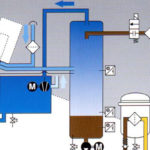
Various types of contamination occur in fluid power systems: gaseous (e.g. air), liquid (e.g. water) and solid contaminants. Focusing on water, this type of contamination can be caused by moisture from ambient air, leakage of cooling systems or process water, leakage of seals and chemical processes such as combustion, oxidation and … [Read more...] about How do you remove water from hydraulic fluid?
What is molecular dynamics simulation of hydraulic fluid?

In a recent blog, “A nanoscale view of hydraulic fluids,” we related how researchers at the University of California, Merced and the Milwaukee School of Engineering are working to better understand the fundamentals of hydraulics fluids on the molecular level, and how that might lead to more-efficient fluid-power systems. A key tool in the … [Read more...] about What is molecular dynamics simulation of hydraulic fluid?
A nanoscale view of hydraulic fluids
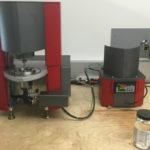
There’s a growing realization that the type and formulation of hydraulic fluids can have a significant effect on machine efficiency, performance and overall life. But to date, fluid manufacturers have, for the most part, relied on traditional laboratory methods to develop new fluid chemistries. Now, in the project “Simulation, Rheology and … [Read more...] about A nanoscale view of hydraulic fluids
NFPA Milwaukee Regional Meeting talks to focus on contamination and fluid control

The 2016 NFPA Milwaukee Regional Meeting, scheduled for Tuesday, September 27 at the Milwaukee School of Engineering, will feature two experts from the industry with experience and solid information regarding important challenges that fluid power users may encounter. “The Value of Leak Testing in Preventing Hydraulic Fluid Leaks” will be … [Read more...] about NFPA Milwaukee Regional Meeting talks to focus on contamination and fluid control
Where should I take my oil samples?

Oil sampling and analysis is a method of determining and tracking the health of your hydraulic fluid. A oil sample is taken and sent to a lab to discover ISO particle count, water saturation, additive content and viscosity. These qualities in normal range are imperative to a reliable hydraulic system, and sample testing is the best way to test for … [Read more...] about Where should I take my oil samples?